Sleep and Weight Loss: A UK Clinical Pillar Guide
Sleep plays a key role in appetite, cravings, energy levels, and weight regain. This guide explains how improving sleep can support sustainable weight loss.
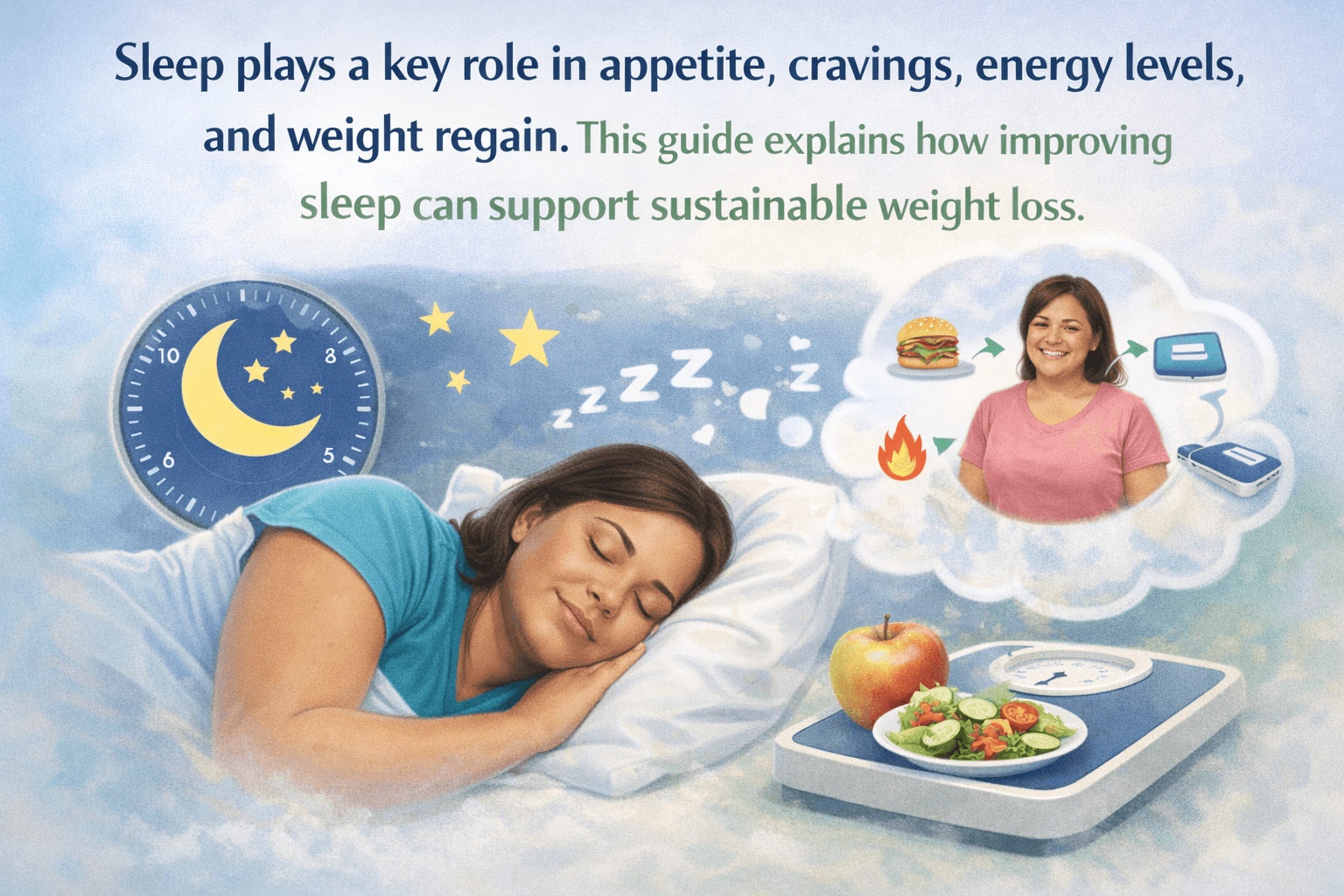
Sleep is often overlooked in weight loss, yet it plays a critical role in regulating appetite, energy levels, mood, and metabolic health. Poor or disrupted sleep can increase hunger, drive cravings, and make it harder to maintain healthy routines.
This pillar explains how sleep influences weight and why improving sleep quality can support sustainable weight loss, particularly for people using weight loss medication such as Wegovy (semaglutide) or Mounjaro (tirzepatide).
The link between sleep and appetite
Sleep affects several hormones involved in appetite regulation. Inadequate sleep can increase hunger signals and reduce feelings of fullness, leading to higher calorie intake. It can also reduce impulse control, making it harder to resist highly palatable foods.
Over time, poor sleep can contribute to weight gain and make weight loss more difficult to sustain.
Sleep and energy balance
When sleep is disrupted, energy levels often fall. This can reduce motivation for physical activity and increase reliance on convenience foods. Poor sleep can also impair recovery from exercise, increasing fatigue and injury risk.
Sleep apnoea and weight
Obstructive sleep apnoea is more common in people with higher body weight. Symptoms may include loud snoring, pauses in breathing during sleep, morning headaches, and excessive daytime sleepiness. Untreated sleep apnoea can affect blood pressure, blood sugar control, and weight regulation. Anyone with symptoms should seek medical assessment.
Improving sleep quality
Small, consistent changes can make a meaningful difference. Helpful strategies include maintaining a regular wake time, getting daylight exposure in the morning, limiting caffeine later in the day, reducing alcohol intake, and establishing a calming evening routine.
For people experiencing ongoing insomnia, targeted support may be needed.
Sleep while using weight loss medication
Some people notice changes in sleep when starting weight loss medication, particularly during periods of appetite reduction or nausea. Ensuring adequate nutrition, hydration, and a stable routine can help support sleep quality during treatment.
How to use this pillar
This page acts as your sleep hub. Use it to explore articles on sleep hygiene, managing insomnia, sleep apnoea awareness, shift work strategies, and improving sleep alongside weight loss medication.
Further reading
• NHS guidance on sleep and fatigue
• NICE guidance on sleep disorders where relevant
Get weekly weight loss tips
Join our newsletter for provider updates, expert guidance, and exclusive offers — no spam.
Subscribe free