Exercise for Menopause Weight Gain: What Actually Helps Your Middle
Same habits, but a thickening waist? Here's why menopause shifts weight to your middle, why more cardio rarely fixes it, and the type of exercise that genuinely makes a difference.
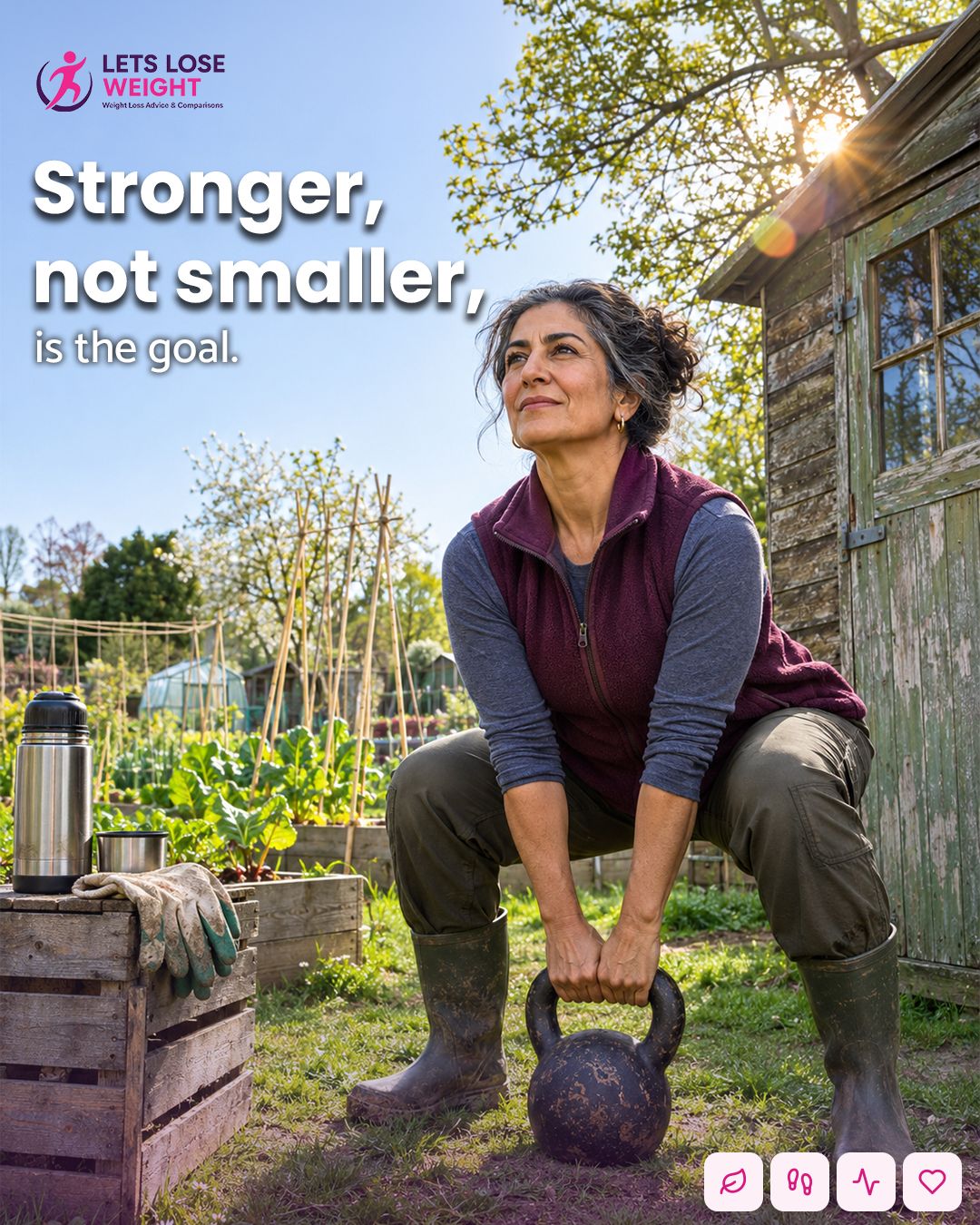
Exercise for Menopause Weight Gain: What Actually Helps Your Middle
You haven't changed much. Same meals, same walks, same routine. Yet your waistband has grown tighter and the weight seems to settle in places it never used to. For many women in their late forties and fifties, this is the moment exercise starts to feel like it has stopped working.
What is the best exercise for menopause weight gain?
The best exercise for menopause weight gain combines strength training two or three times a week with regular moderate activity, such as brisk walking. Strength work protects the muscle that falling oestrogen and ageing gradually erode, while walking supports overall energy balance. Together, they reduce fat around the middle more effectively than cardio alone.
Why your middle changes now
As oestrogen falls, the body tends to store more fat around the abdomen rather than the hips and thighs. At the same time, muscle quietly declines with age unless it's actively maintained. Less muscle means your body needs slightly less energy day to day, so the same habits start to tip into gradual gain.
None of this is a personal failing. It's biology, and it can be worked with.
The cardio trap
What tends to happen is that women respond by doing more of what they already know: longer walks, extra spin classes, another stint on the cross-trainer. It feels productive, but it doesn't address the muscle loss underneath. Some end up hungrier and more tired, with very little change in their shape.
That's why it's worth understanding the difference between strength training and cardio for weight loss, particularly at this stage of life.
What strength training looks like in real life
It doesn't have to mean a weights room. In real life, it might be:
- squats to a chair holding dumbbells or full water bottles
- wall press-ups, progressing to kitchen worktop press-ups
- resistance band rows looped around a door handle
- a weekly Pilates or body conditioning class
Two or three sessions of twenty to thirty minutes is enough to begin. The key is gradually making things a little heavier or harder, because muscle only responds to a challenge.
There's a welcome bonus, too. Strength training helps protect bone density, which matters far more after menopause.
Be patient with the scale
A common mistake people make is judging progress on weight alone. As muscle improves, the scale may barely move while your clothes fit differently. Measuring your waist once a month gives a fairer picture, and stops you mistaking a slow patch for a genuine weight loss plateau.
Night sweats and broken sleep can also sap the energy you need to train, so it's worth speaking to your GP about symptom support if they're getting in the way.
The bottom line
Menopause doesn't stop exercise working. It changes which kind matters most. Build strength, keep walking and give your body a few months to respond.
Get weekly weight loss tips
Join our newsletter for provider updates, expert guidance, and exclusive offers — no spam.
Subscribe free