Mounjaro Side Effects and Tolerability: A Balanced View
Mounjaro can cause side effects, particularly when starting treatment. Learn what is common, what is less common, and how to manage symptoms safely.
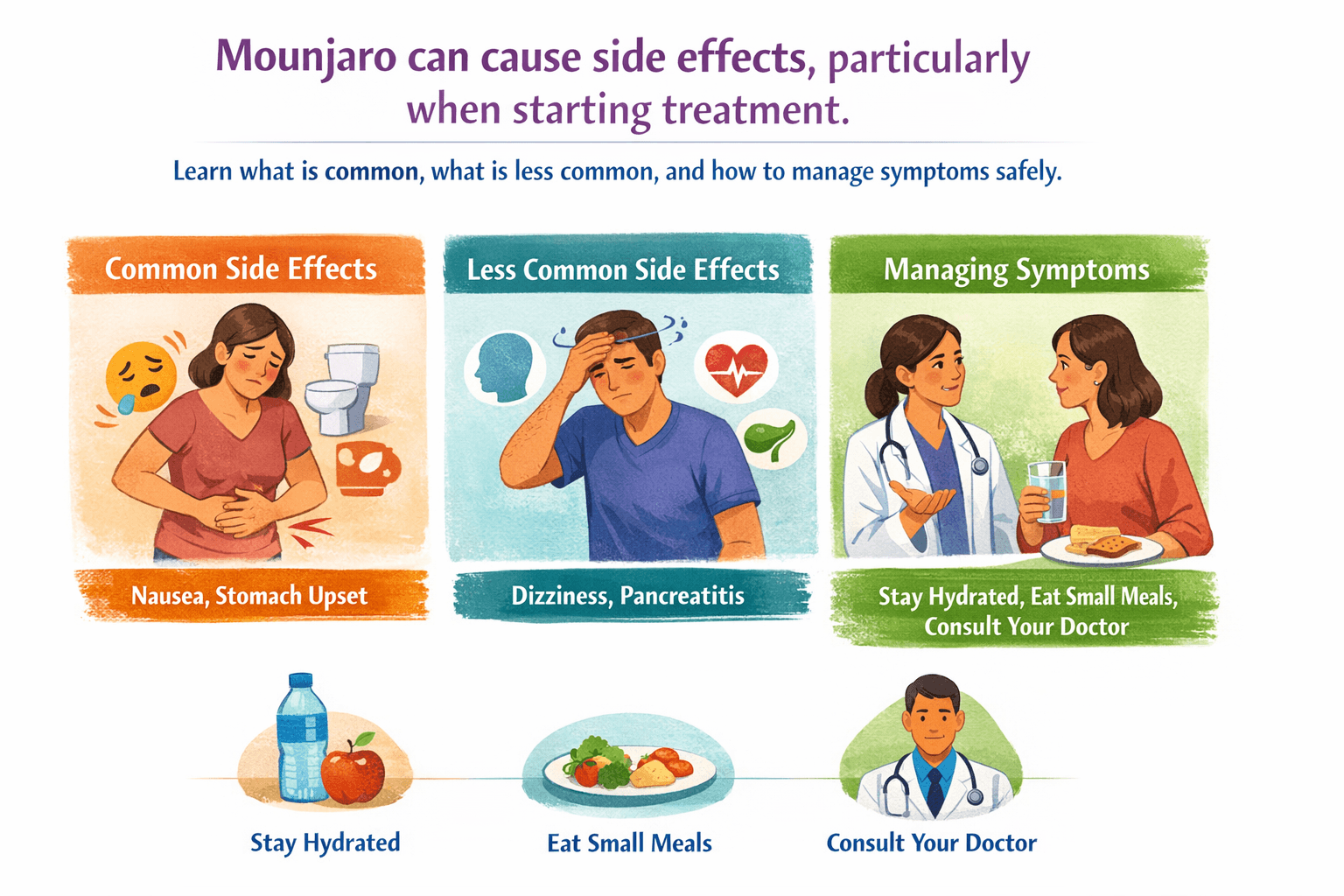
Mounjaro (tirzepatide) is an effective weight loss medication, but like all treatments, it can cause side effects. Understanding what is common, how long symptoms may last, and how to manage them can help you feel more prepared when starting treatment.
If you are new to Mounjaro, it may be helpful to first understand how it works. See our guide Mounjaro Explained: How It Differs From Other Weight Loss Medications.
Why side effects occur
Mounjaro works by acting on two hormone pathways, GLP-1 and GIP. These hormones influence appetite, digestion, and blood sugar regulation. As a result, the digestive system can take time to adjust, particularly at the start of treatment or when doses increase.
For a broader understanding of how these medications affect appetite, see our article What Are GLP-1 Medications and Why Do They Help With Weight Loss.
Common side effects
The most common side effects are related to digestion. These include nausea, vomiting, diarrhoea, constipation, and reduced appetite.
Nausea is the most frequently reported symptom, especially in the early stages. It is usually mild to moderate and tends to improve as the body adjusts to treatment.
Less common side effects
Some individuals may experience bloating, reflux, fatigue, or changes in appetite patterns. These effects can vary depending on the individual and the dose.
Rare but important side effects
More serious side effects are uncommon but may include dehydration, gallbladder problems, or persistent gastrointestinal symptoms.
Medical advice should be sought if symptoms are severe, prolonged, or worsening.
How Mounjaro compares to Wegovy
Mounjaro and Wegovy have similar side effect profiles, as both affect appetite and digestion. However, because Mounjaro acts on two hormone pathways, some people may experience differences in how symptoms present.
For a direct comparison, see our guide Wegovy Side Effects: What’s Common, What’s Rare, and What to Expect.
Managing side effects
There are practical steps that can help reduce symptoms:
• Eat smaller meals
• Avoid very rich or fatty foods
• Eat slowly and stop when full
• Maintain hydration
• Follow the recommended dosing schedule
Gradual dose increases are an important part of treatment and help improve tolerability.
How long do side effects last
For most people, side effects are temporary and improve within a few weeks. As the body adapts, symptoms often become less noticeable.
When to speak to a clinician
Regular follow up is important when using Mounjaro. A clinician can help adjust the dose, provide advice, and ensure treatment remains appropriate.
If symptoms feel difficult to manage or unexpected, it is always appropriate to seek guidance.
Putting side effects into context
Side effects should be considered alongside the potential benefits of treatment. For many individuals, improvements in weight and health outcomes outweigh the temporary discomfort experienced early on.
For a broader discussion of safety, see our article Are Weight Loss Medications Safe? Understanding the Evidence.
Medication as part of a wider plan
Mounjaro works best when combined with nutrition, physical activity, sleep, and stress management.
For a full overview of how medication fits into long term care, see our pillar guide Weight Loss Medication in the UK: A Patient-Centred Pillar Guide.
Further reading
• NICE guidance on obesity management
• NHS weight management services
• Clinical research on tirzepatide
Get weekly weight loss tips
Join our newsletter for provider updates, expert guidance, and exclusive offers — no spam.
Subscribe free