Retatrutide TRIUMPH-1 Results Explained: What the 80-Week Phase 3 Trial Found
TRIUMPH-1 tested retatrutide in 2,339 adults over 80 weeks. What the phase 3 results showed for weight, knee pain and sleep apnoea, and what they leave unanswered.
Important: investigational medicine notice. Retatrutide has not received marketing authorisation from the MHRA and cannot be legally prescribed, dispensed or sold in the UK outside of an authorised clinical trial. This article is for information only. It is not medical advice and is not a recommendation to seek or use retatrutide. If you are considering weight-management medication, speak to your GP or a regulated UK prescriber about MHRA-approved options.
Retatrutide TRIUMPH-1 Results Explained: What the 80-Week Phase 3 Trial Found
TRIUMPH-1 is the first phase 3 trial of retatrutide in adults with obesity or overweight to report in full. Eli Lilly announced topline results in May 2026, and the complete trial was published in the New England Journal of Medicine on 29 September 2026. This article explains what the trial measured, what it found, and how much weight the figures can bear.
What the evidence supports is that retatrutide produced large average weight reductions over 80 weeks, alongside improvements in knee osteoarthritis pain and sleep apnoea in two smaller groups. It does not yet show long-term safety, effects on heart attacks or strokes, or how retatrutide compares directly with licensed medicines.
The short answer
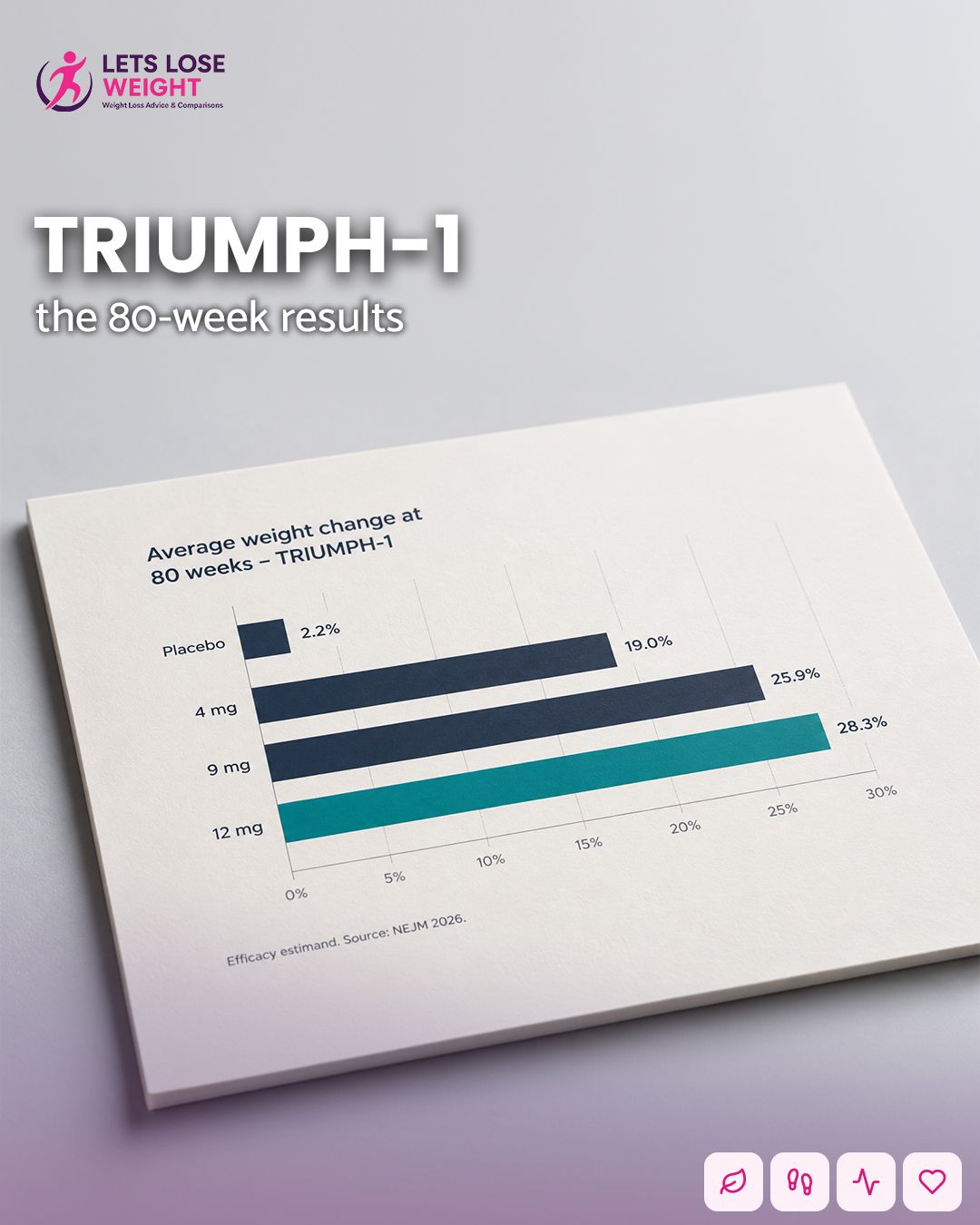
TRIUMPH-1 enrolled 2,339 adults with obesity or overweight and no diabetes. After 80 weeks, those on the 12 mg dose lost an average of 28.3% of body weight if they stayed on treatment, compared with 2.2% on placebo. Counting everyone randomised, including those who stopped, the figures were 25.0% and 3.9%. Retatrutide remains unlicensed.
How the trial was designed
Participants were randomly assigned in equal numbers to weekly retatrutide at 4 mg, 9 mg or 12 mg, or to placebo, alongside diet and activity advice. Doses were increased in steps at the start. The trial also contained two "basket" studies, which are smaller groups inside the main trial with their own endpoints: 574 people with knee osteoarthritis and 243 with moderate to severe obstructive sleep apnoea.
For a plain-English account of how a triple agonist acts on GLP-1, GIP and glucagon receptors, see our article on how retatrutide works.
What TRIUMPH-1 found
Trials of weight-loss medicines usually report two analyses, and the difference matters:
- Efficacy estimand: what happened if everyone had stayed on treatment. Weight fell by 19.0% (4 mg), 25.9% (9 mg) and 28.3% (12 mg), against 2.2% on placebo.
- Treatment-regimen estimand: everyone randomised, whether or not they stopped. Weight fell by 17.6%, 23.7% and 25.0%, against 3.9% on placebo.
Lilly's headline of 28.3% uses the first analysis. The second is closer to what happens in real-world use, where some people stop.
Other findings included:
- 45.3% of people on 12 mg lost at least 30% of their body weight, against 0.5% on placebo.
- In the knee osteoarthritis group, pain scores fell by up to 73% from baseline.
- In the sleep apnoea group, breathing interruptions during sleep fell by up to 36 events an hour, around 61%.
These are averages. Individual results in the trial varied widely, and they cannot predict what any one person would lose.
Side effects and discontinuation
As in the phase 2 trial, the most common side effects were gastrointestinal, mainly nausea, diarrhoea, constipation and vomiting, and most were mild to moderate. Reported rates of stopping because of side effects were 11.3% on 12 mg, compared with 4.9% on placebo. Dysaesthesia, an altered or uncomfortable skin sensation, was also reported more often with retatrutide. Symptoms linked to low blood pressure were more frequent in people already taking blood pressure medicines.
What the trial does not tell us
- Long-term safety. Eighty weeks is long for an obesity trial but short for a medicine that may be taken for years.
- Cardiovascular outcomes. TRIUMPH-1 was not designed to show fewer heart attacks or strokes. A dedicated outcomes trial, TRIUMPH-Outcomes, is ongoing.
- Direct comparisons. There was no Wegovy (semaglutide) or Mounjaro (tirzepatide) arm, so comparisons with licensed medicines are indirect.
- Who took part. People with diabetes were excluded, and trial participants are screened and monitored more closely than in routine care.
- What happens after stopping. Weight regain after stopping was not the focus of this analysis.
What this means in the UK
As of October 2026, retatrutide has no MHRA marketing authorisation. Lilly plans to submit it to the US Food and Drug Administration in the first quarter of 2027, and no UK application has been announced. Products sold online as retatrutide are unlicensed and untested, and trial results do not apply to them. Licensed options, including Wegovy and Mounjaro, are covered in our weight loss medication UK pillar guide.
The bottom line
TRIUMPH-1 confirms, in a large peer-reviewed trial, the scale of weight loss seen in phase 2, with average reductions of 25% to 28% at the highest dose depending on the analysis. The trial is strong evidence of efficacy over 80 weeks, but it leaves long-term safety and cardiovascular benefit unanswered, and the medicine is not licensed. Anyone considering medication for weight should speak to their GP or a regulated UK prescriber about approved options.
Sources and further reading
- Jastreboff AM, Kaplan LM, Davies MJ, Wilding JPH, et al. Retatrutide, a Triple Hormone Receptor Agonist, for Treatment of Obesity. N Engl J Med. 2026. doi:10.1056/NEJMoa2604169
- Eli Lilly and Company: Lilly's triple agonist, retatrutide, delivered powerful weight loss in pivotal Phase 3 obesity trial (topline press release, 21 May 2026)
- ClinicalTrials.gov: A Study of Retatrutide (LY3437943) in Participants Who Have Obesity or Overweight (TRIUMPH-1), NCT05929066
- Jastreboff AM, Kaplan LM, Frías JP, et al. Triple–Hormone-Receptor Agonist Retatrutide for Obesity — A Phase 2 Trial. N Engl J Med. 2023;389:514–526.
Related reading from the Health Hub
- What is retatrutide? A clinical overview
- Retatrutide side effects and safety profile
- How long does it take to see results on weight loss medication?
Always speak to your GP or a regulated UK prescriber before starting, stopping or changing any medication. This article is for general information only and does not replace individual medical advice.
Get weekly weight loss tips
Join our newsletter for provider updates, expert guidance, and exclusive offers — no spam.
Subscribe free