Can Sleep Apnoea Make It Harder to Lose Weight?
Loud snoring, gasping at night and waking exhausted could be sleep apnoea, and it can quietly make weight loss much harder. Here's how the two are linked and what to do next.
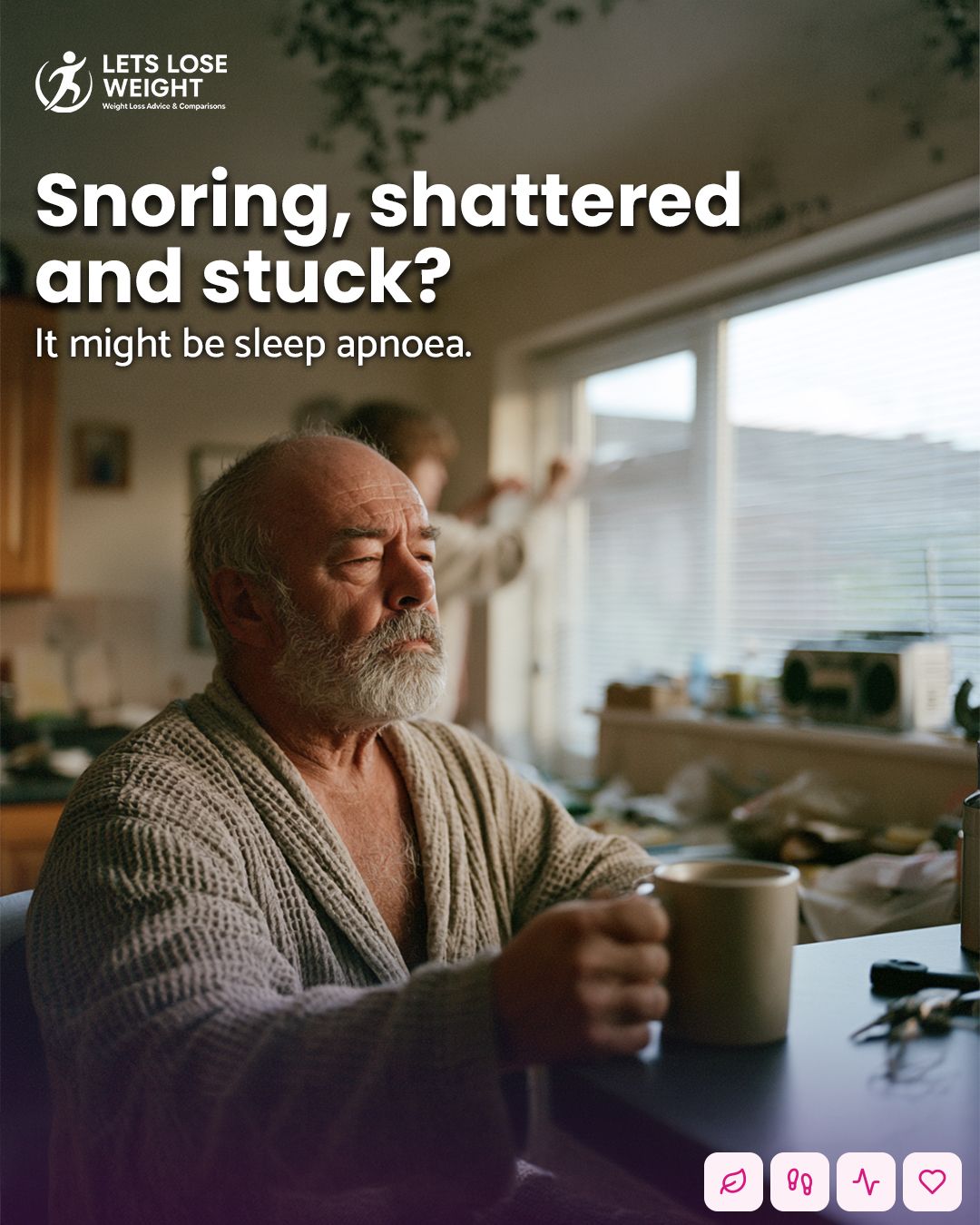
Can Sleep Apnoea Make It Harder to Lose Weight?
Your partner has been nudging you about the snoring for years. You wake with a dry mouth and a dull headache, and by mid-morning you could happily put your head down on the desk. You're trying to lose weight, but you're running on empty before the day has properly started.
If that rings true, it's worth asking whether something more than ordinary poor sleep is going on.
Does sleep apnoea make weight loss harder?
Sleep apnoea can make weight loss harder because your breathing repeatedly stops and starts during the night, breaking up your sleep without you realising. That leaves you exhausted, hungrier and less able to stay active. Extra weight, particularly around the neck, also makes apnoea worse, so the two can quietly feed each other.
What sleep apnoea actually is
Obstructive sleep apnoea happens when the soft tissues in your throat relax and narrow the airway while you sleep. Your breathing pauses, your brain senses the drop in oxygen and jolts you just awake enough to start breathing again. This can happen dozens of times an hour.
You'll rarely remember these moments. What you notice is the aftermath: waking unrefreshed, feeling foggy, nodding off in front of the television and relying on coffee to function. In real life, people often blame age, stress or a busy job for years before anyone mentions apnoea.
Why it gets in the way of weight loss
When your sleep is broken this often, your body behaves as though it's had far less sleep than the hours suggest. Appetite tends to rise, sugary and starchy foods look more appealing and the energy to cook or go for a walk simply isn't there. It's the same pattern behind why waking up tired makes everything harder, only stronger and more persistent.
Then there's the loop. NHS sleep services note that apnoea is more common in people carrying extra weight, especially around the neck. Gaining weight can make the airway narrower, which worsens the apnoea, which makes losing weight harder still.
Signs worth taking seriously
You don't need every one of these, but a few together are worth acting on:
- Loud, regular snoring, particularly with pauses, gasps or choking sounds
- Waking with a headache or very dry mouth
- Feeling sleepy during the day even after a full night in bed
- Getting up to wee several times a night
- Struggling with concentration, memory or a short temper
- Dozing off easily when sitting still, such as reading or watching TV
A common mistake people make is assuming that because they fall asleep quickly, they must sleep well. Falling asleep the moment your head hits the pillow can actually be a sign you're severely underslept.
What to do about it
Start with your GP. They may ask you to fill in a short questionnaire about daytime sleepiness and refer you for a sleep study, which these days can often be done at home with a small monitor.
If apnoea is diagnosed, treatment such as a CPAP machine, which gently keeps your airway open overnight, can make a remarkable difference. Many people say they hadn't realised how tired they'd been until they slept properly for the first time in years. With more energy, sticking to sensible eating and moving more stops feeling like such an uphill battle.
Weight loss can then improve apnoea in return. It isn't always a complete cure, because the shape of your airway plays a part too, but for many people even a modest loss eases symptoms. If you drive, it's also important to know that the DVLA may need to be told about diagnosed sleep apnoea that causes excessive sleepiness, so ask your GP about this.
The takeaway
If you've been doing everything right and still feel stuck and shattered, don't just push harder with the diet. Look at your nights. Getting checked is simple, and treating the root cause is often the missing link in your weight loss that no meal plan was ever going to fix.
Get weekly weight loss tips
Join our newsletter for provider updates, expert guidance, and exclusive offers — no spam.
Subscribe free