How Poor Sleep Affects Hunger Hormones and Weight Loss
Poor sleep can disrupt hunger hormones, increasing appetite and cravings. Learn how this affects weight loss and what you can do.
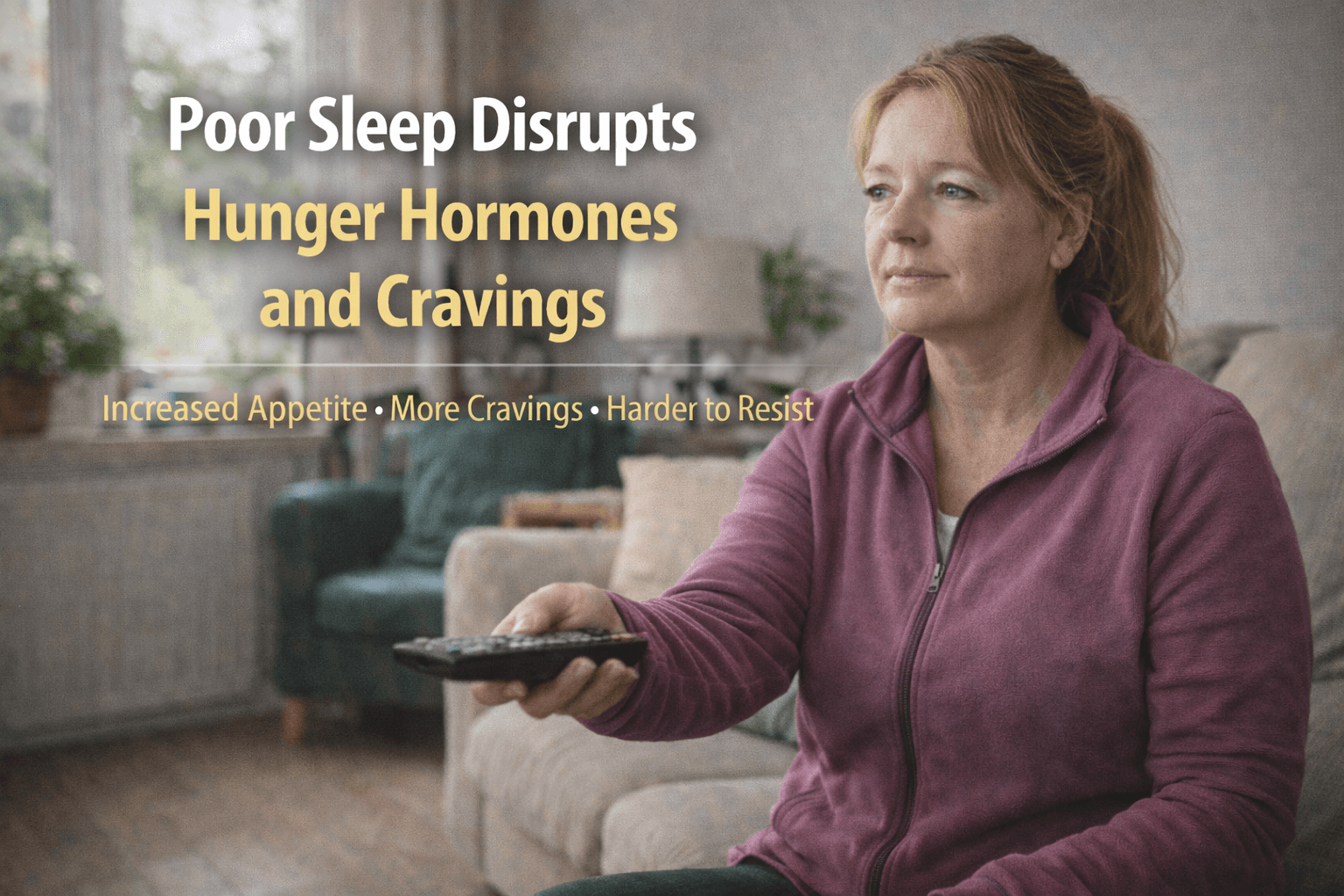
How Poor Sleep Affects Hunger Hormones and Weight Loss
If you’ve ever felt hungrier than usual after a poor night’s sleep, you’re not imagining it.
In real life, appetite isn’t just about how much you’ve eaten — it’s heavily influenced by how well you’ve slept. What tends to happen is that when sleep is disrupted, the hormones that control hunger and fullness become unbalanced.
And this can make weight loss feel far more difficult than it should be.
Does Poor Sleep Affect Hunger Hormones? (Quick Answer)
Yes, poor sleep can disrupt key hunger hormones such as ghrelin and leptin. Ghrelin increases appetite, while leptin signals fullness. When sleep is poor, ghrelin levels rise and leptin levels drop, leading to increased hunger, stronger cravings and a higher likelihood of overeating.
Understanding Ghrelin and Leptin
- ghrelin increases when you’re tired, making you feel hungrier
- leptin decreases, reducing feelings of fullness
- your body looks for quick sources of energy
In real life, this often looks like feeling hungry even after you’ve eaten enough, or craving foods you wouldn’t normally choose.
A common mistake people make is assuming they lack control, when in reality, their hormones are influencing their behaviour.
How This Impacts Your Eating Habits
- larger portion sizes
- more frequent snacking
- stronger cravings for sugary foods
If you haven’t already, it’s worth reading Why Sleep Could Be the Missing Link in Your Weight Loss.
Why Cravings Feel Stronger When You’re Tired
- high-calorie foods become more appealing
- decision-making becomes weaker
- comfort eating feels harder to resist
If this sounds familiar, you may also find it helpful to read Why Poor Sleep Leads to Late Night Snacking.
How to Support Your Hunger Hormones
- improving sleep consistency
- eating regular, balanced meals
- recognising the difference between hunger and fatigue
- building a steady routine
The Key Takeaway
Hunger isn’t always about food — it’s often about sleep.
When your body is well rested, your appetite becomes more balanced and easier to manage.
Have you noticed how much hungrier you feel after a poor night’s sleep? That’s often where the real impact begins.
Get weekly weight loss tips
Join our newsletter for provider updates, expert guidance, and exclusive offers — no spam.
Subscribe free