How Sleep Controls Hunger Hormones (And Why You Feel Hungrier When Tired)
how-sleep-controls-hunger-hormones
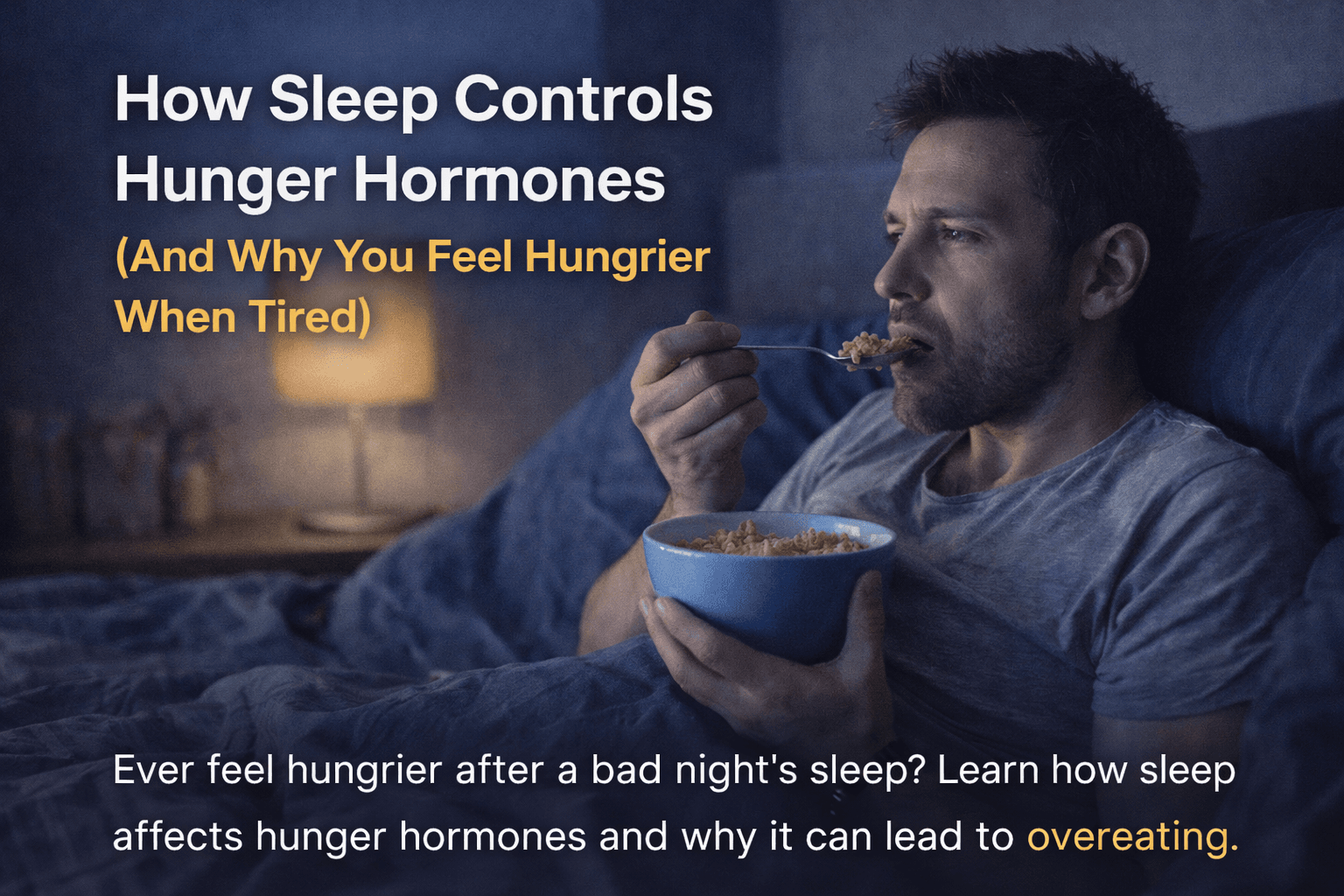
How Sleep Controls Hunger Hormones (And Why You Feel Hungrier When Tired)
If you’ve ever noticed that you feel hungrier after a poor night’s sleep, you’re not imagining it.
In real life, this is something many people experience — yet few realise there’s a clear biological reason behind it.
Sleep directly affects the hormones that control your appetite, and when those hormones are disrupted, hunger can feel much harder to manage.
The Two Hormones That Control Hunger
Your appetite is largely controlled by two key hormones:
Ghrelin – tells your body you’re hungry
Leptin – tells your body you’re full
When everything is working well, these hormones stay balanced, helping you eat the right amount without overthinking it.
But when sleep is poor, that balance shifts.
What Happens When You Don’t Sleep Properly
When you’re sleep-deprived, ghrelin increases and leptin decreases.
What tends to happen is:
- you feel hungrier than usual
- meals feel less satisfying
- cravings appear more frequently
In real life, this often looks like eating a full meal but still wanting something extra shortly after.
This is not a lack of control — it’s your body trying to compensate.
If you haven’t already, it’s worth reading Why Sleep Could Be the Missing Link in Your Weight Loss to understand how this fits into the bigger picture.
Why You Crave High-Calorie Foods When Tired
Sleep doesn’t just affect how much you eat — it affects what you want to eat.
When you’re tired, your brain becomes more responsive to rewarding foods, particularly:
- sugary snacks
- processed foods
- high-fat options
At the same time, your ability to make balanced choices weakens.
A common pattern I see is someone eating well all day, then struggling in the evening once fatigue sets in.
If this sounds familiar, you may also find it helpful to read How Poor Sleep Triggers Cravings and Overeating.
How This Impacts Your Weight Loss Progress
When hunger hormones are out of balance, it becomes much harder to stay consistent.
You may find yourself:
- snacking more often
- increasing portion sizes without realising
- feeling less satisfied after meals
Over time, this can quietly slow your progress.
This is why sleep plays such an important role in weight management.
If you want to understand how your body processes this energy, take a look at How Sleep Affects Metabolism and Fat Storage.
Simple Ways to Support Your Hunger Hormones
You don’t need to change everything overnight.
Start with:
- aiming for consistent sleep times
- eating regular meals during the day
- reducing late-night snacking
- creating a calming evening routine
These small steps can help restore balance over time.
The Key Takeaway
If you feel hungrier when you’re tired, it’s not in your head — it’s your hormones responding to poor sleep.
By improving your sleep, you can reduce cravings, feel more satisfied after meals, and make weight loss feel far more manageable.
Have you noticed your appetite changes after a poor night’s sleep? It’s often one of the clearest signals your body gives you.
Get weekly weight loss tips
Join our newsletter for provider updates, expert guidance, and exclusive offers — no spam.
Subscribe free