Why Late Nights Lead to Overeating (And How to Break the Habit)
Late-night snacking can quietly stall your weight loss. Learn why it happens, what it looks like in real life, and how to stop it.
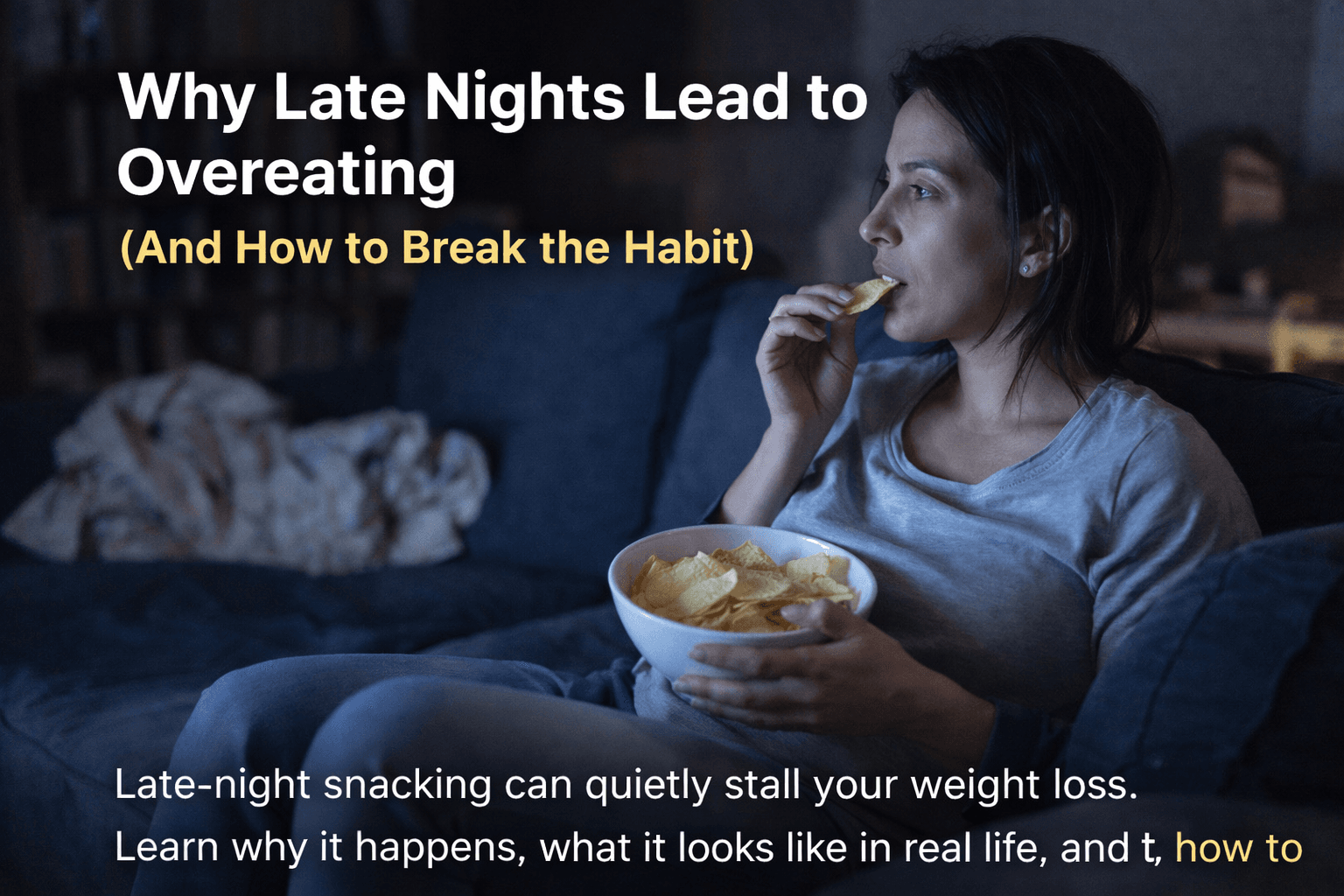
Why Late Nights Lead to Overeating (And How to Break the Habit)
If you’ve ever told yourself “I’ll just have something small” in the evening, only to keep going back for more, you’re certainly not alone.
In real life, late-night eating is one of the most common reasons weight loss feels harder than it should.
And more often than not, it has very little to do with hunger — and everything to do with tiredness and routine.
Why Evenings Are When Things Slip
During the day, most people are structured. Meals are planned, routines are in place, and it’s easier to stay on track.
But in the evening, that structure disappears.
What tends to happen is:
- you finally sit down and relax
- willpower is lower after a long day
- you start eating out of habit, not hunger
In real life, this often looks like snacking in front of the television or picking at food while scrolling on your phone.
Tiredness Changes Your Decisions
When you’re tired, your brain looks for the easiest possible reward — and food is one of the quickest.
This means:
- you’re more likely to choose high-calorie foods
- portion sizes become less controlled
- stopping feels harder once you’ve started
If you haven’t already, it’s worth reading Why Sleep Could Be the Missing Link in Your Weight Loss.
The Habit Loop of Night Snacking
Late-night eating is rarely just about hunger — it’s often a habit.
- you associate evenings with food
- certain triggers lead to snacking
- it becomes automatic over time
This is where extra calories quietly build up and slow down progress.
Why This Impacts Weight Loss So Much
Even small amounts of extra food each evening can make a difference over time.
If cravings are a regular issue, you may also find it helpful to read How Poor Sleep Triggers Cravings and Overeating.
How to Break the Late-Night Eating Cycle
- set a clear “kitchen closed” time
- create a simple evening routine
- brush your teeth earlier
- keep snacks out of reach
The Key Takeaway
Late-night eating is rarely about hunger — it’s usually about tiredness, habit and environment.
By improving your sleep and structure, you can reduce mindless snacking.
Get weekly weight loss tips
Join our newsletter for provider updates, expert guidance, and exclusive offers — no spam.
Subscribe free