How Stress Affects Weight Loss: The Complete Guide to Habits, Hormones and Recovery
Stress affects more than just your mood — it impacts habits, sleep, and weight loss. This complete guide explains how it all connects.
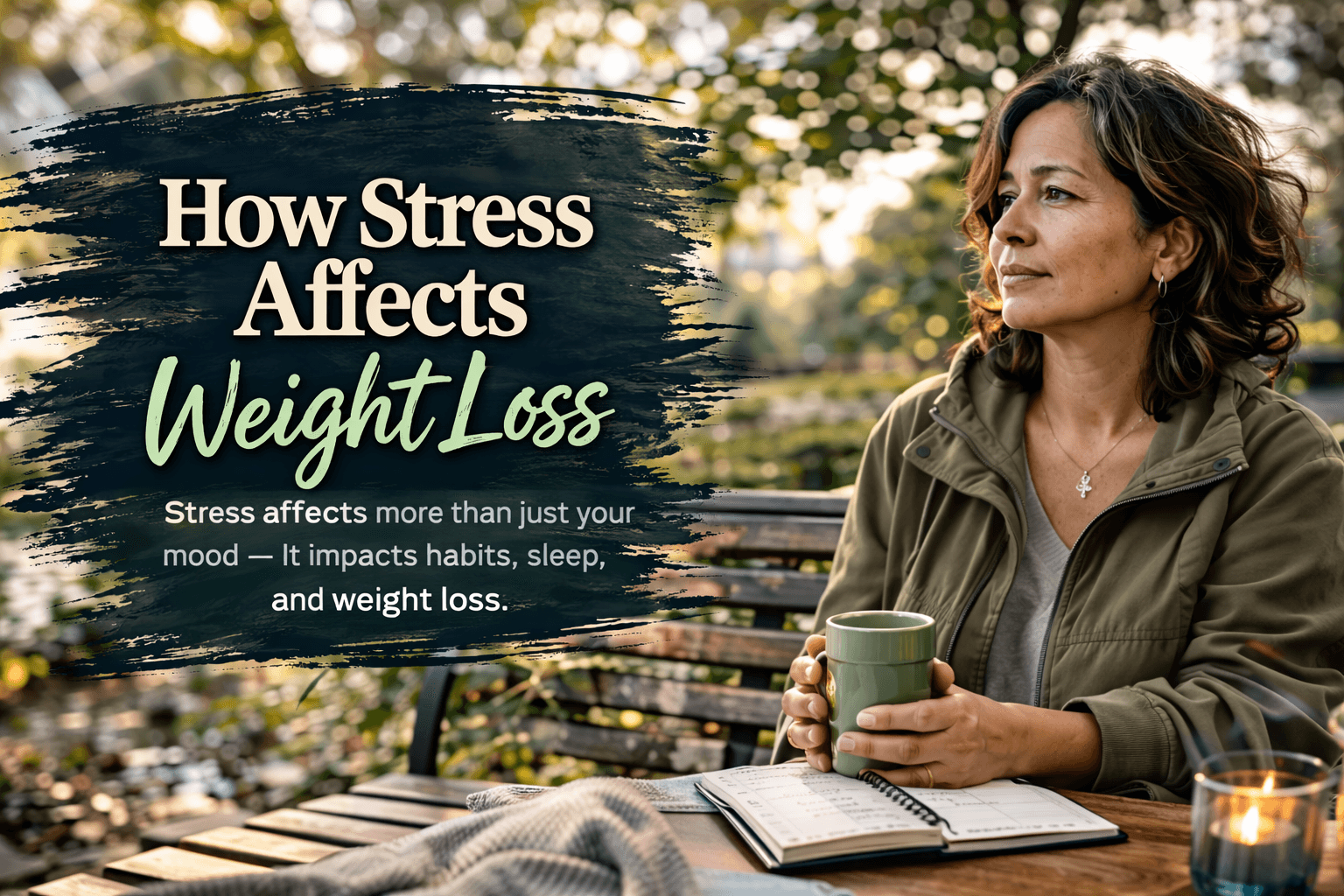
How Stress Affects Weight Loss: The Complete Guide to Habits, Hormones and Recovery
Introduction
If you feel like you’re doing everything right but not seeing results, stress may be part of the picture.
In real life, this often looks like trying to eat well, stay active, and still feeling stuck. It can be frustrating, especially when you can’t pinpoint what’s going wrong.
Understanding how stress affects weight loss helps bring clarity to why progress sometimes feels inconsistent.
How Stress Affects Weight Loss Overall
Stress doesn’t just affect one area — it affects several at the same time.
What tends to happen is that stress influences your appetite, sleep, energy levels, and daily habits. Each of these plays a role in weight loss, even if the changes feel small at first.
The Main Ways Stress Impacts Progress
- Eating habits and food choices
- Sleep quality and recovery
- Daily movement and energy
- Consistency with routines
How Does Stress Affect Weight Loss? (Featured Answer)
Stress affects weight loss by influencing appetite, sleep, energy levels, and daily habits. These changes can reduce consistency, increase cravings, and make it harder to maintain routines, which can slow progress over time.
Why It Feels Hard to Stay Consistent
In real life, stress rarely feels dramatic.
This is why weight loss can feel inconsistent rather than completely off track.
You may also find it helpful to read Stress Snacking vs Real Hunger: How to Tell the Difference.
Why Pushing Harder Doesn’t Always Help
A common mistake people make is adding more rules or expecting more discipline.
You may also benefit from understanding Why You Crave Sugar When Stressed.
What Actually Helps
- Keeping meals simple and regular
- Prioritising sleep where possible
- Reducing decision-making around food
- Focusing on small, repeatable habits
Conclusion
Stress affects weight loss in ways that aren’t always obvious.
Often, progress improves when your routine feels manageable, not perfect.
Get weekly weight loss tips
Join our newsletter for provider updates, expert guidance, and exclusive offers — no spam.
Subscribe free