How Stress Disrupts Sleep and Slows Weight Loss Progress
Poor sleep and stress are closely linked. Learn how stress affects weight loss through sleep disruption and daily energy levels.
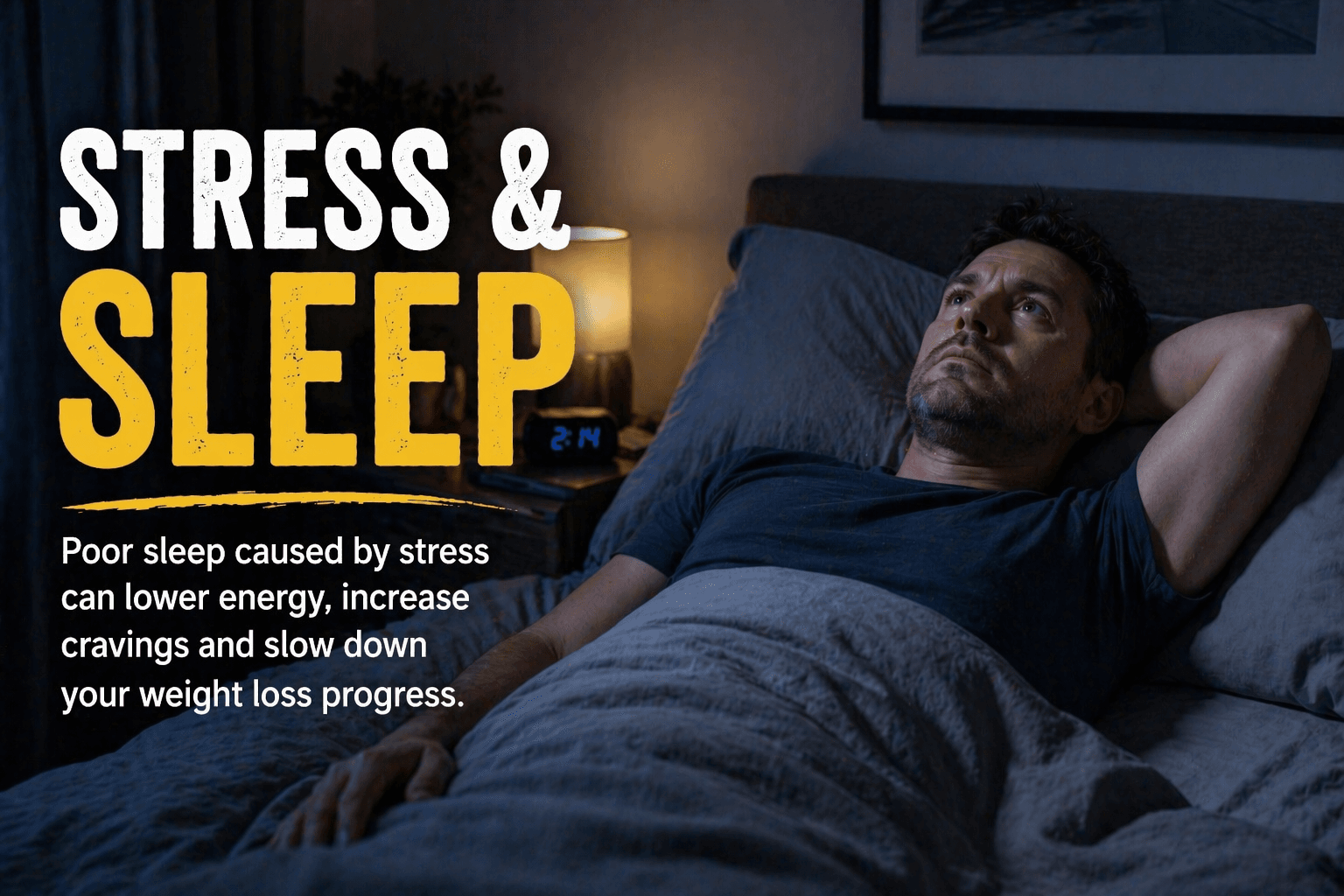
How Stress Disrupts Sleep and Slows Weight Loss Progress
Introduction
If your sleep feels inconsistent, it may be affecting your weight loss more than you realise.
In real life, this often looks like struggling to switch off at night, waking up feeling tired, or feeling like your energy never quite resets.
Understanding how stress affects weight loss includes recognising how important sleep really is.
How Stress Disrupts Sleep
Stress doesn’t always stop you sleeping completely.
What tends to happen is that it affects the quality of your sleep.
How This Affects Weight Loss Habits
- Lower energy levels
- More reactive food choices
- Reduced motivation
- Less consistent routines
How Does Stress Affect Sleep and Weight Loss? (Featured Answer)
Stress affects sleep by reducing sleep quality and increasing restlessness. Poor sleep can lead to lower energy, reduced motivation, and less consistent habits.
What This Looks Like in Real Life
In real life, this often shows up as feeling slightly off rather than completely exhausted.
What tends to happen is that small decisions become harder to manage.
This builds naturally on How Poor Recovery Affects Weight Loss When You’re Stressed.
Why Trying to “Push Through” Doesn’t Work
A common mistake people make is ignoring tiredness and pushing harder.
This often leads to inconsistency.
What Helps More in Practice
- Keeping a bedtime routine
- Reducing screen use
- Allowing time to unwind
- Avoiding pressure
You may also find it helpful to revisit How Screen Time Increases Stress and Affects Weight Loss Habits.
Conclusion
Sleep is part of weight loss, not separate from it.
Improving sleep can make habits feel more manageable.
Get weekly weight loss tips
Join our newsletter for provider updates, expert guidance, and exclusive offers — no spam.
Subscribe free