Why Stress Leads to Emotional Eating (And How It Affects Weight Loss)
Emotional eating is one of the most common ways stress affects weight loss. Here’s why it happens and how to recognise the pattern.
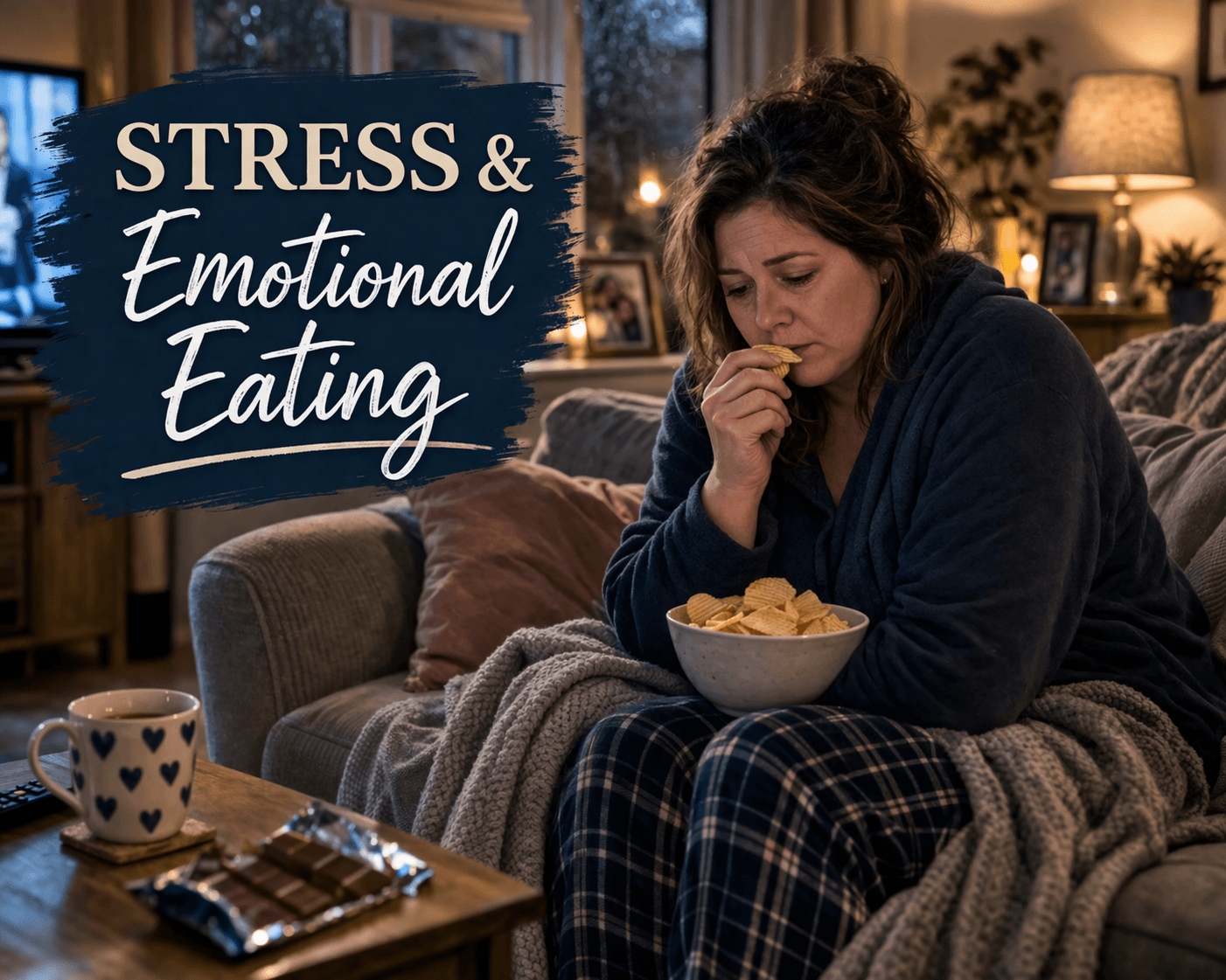
Why Stress Leads to Emotional Eating (And How It Affects Weight Loss)
Introduction
If you find yourself eating when you’re not physically hungry, stress is often the reason.
In real life, this often looks like reaching for snacks after a long day, even if you’ve already eaten. It’s not about hunger — it’s about comfort.
Understanding how stress affects weight loss through emotional eating can help you recognise patterns that are easy to miss.
Why Stress Triggers Emotional Eating
When stress levels rise, your body looks for ways to feel better quickly.
What tends to happen is food becomes a fast and reliable source of comfort. Foods high in sugar or fat can temporarily improve mood, which reinforces the habit.
How Emotional Eating Affects Weight Loss
- Eating in response to stress rather than hunger
- Choosing quick, high-calorie foods
- Feeling guilty afterwards
Over time, these small habits can slow or completely stall weight loss progress.
How Does Stress Cause Emotional Eating? (Featured Answer)
Stress causes emotional eating by increasing cortisol levels and triggering cravings for high-calorie foods. These foods provide short-term comfort, which reinforces the habit. Over time, this pattern makes it harder to manage calorie intake and maintain consistent weight loss behaviours.
What Emotional Eating Looks Like in Real Life
- Snacking while watching TV to unwind
- Eating quickly without really noticing
- Craving specific comfort foods after stressful days
If this sounds familiar, it builds on How Stress Affects Weight Loss: Why Your Body Isn’t Responding.
How to Start Breaking the Cycle
- Pausing before eating and asking if you’re physically hungry
- Creating alternative ways to unwind
- Keeping regular meals to reduce evening cravings
You may also find it helpful to understand How Stress and Sleep Affect Weight Loss.
Conclusion
Emotional eating is one of the most common ways stress affects weight loss — and one of the least talked about.
Once you start recognising it, things begin to feel more manageable.
Get weekly weight loss tips
Join our newsletter for provider updates, expert guidance, and exclusive offers — no spam.
Subscribe free