How Stress Affects Weight Loss Motivation (And Why It Feels So Hard)
If your motivation keeps dropping during your weight loss journey, stress could be the reason. Here’s how stress affects weight loss habits and consistency.
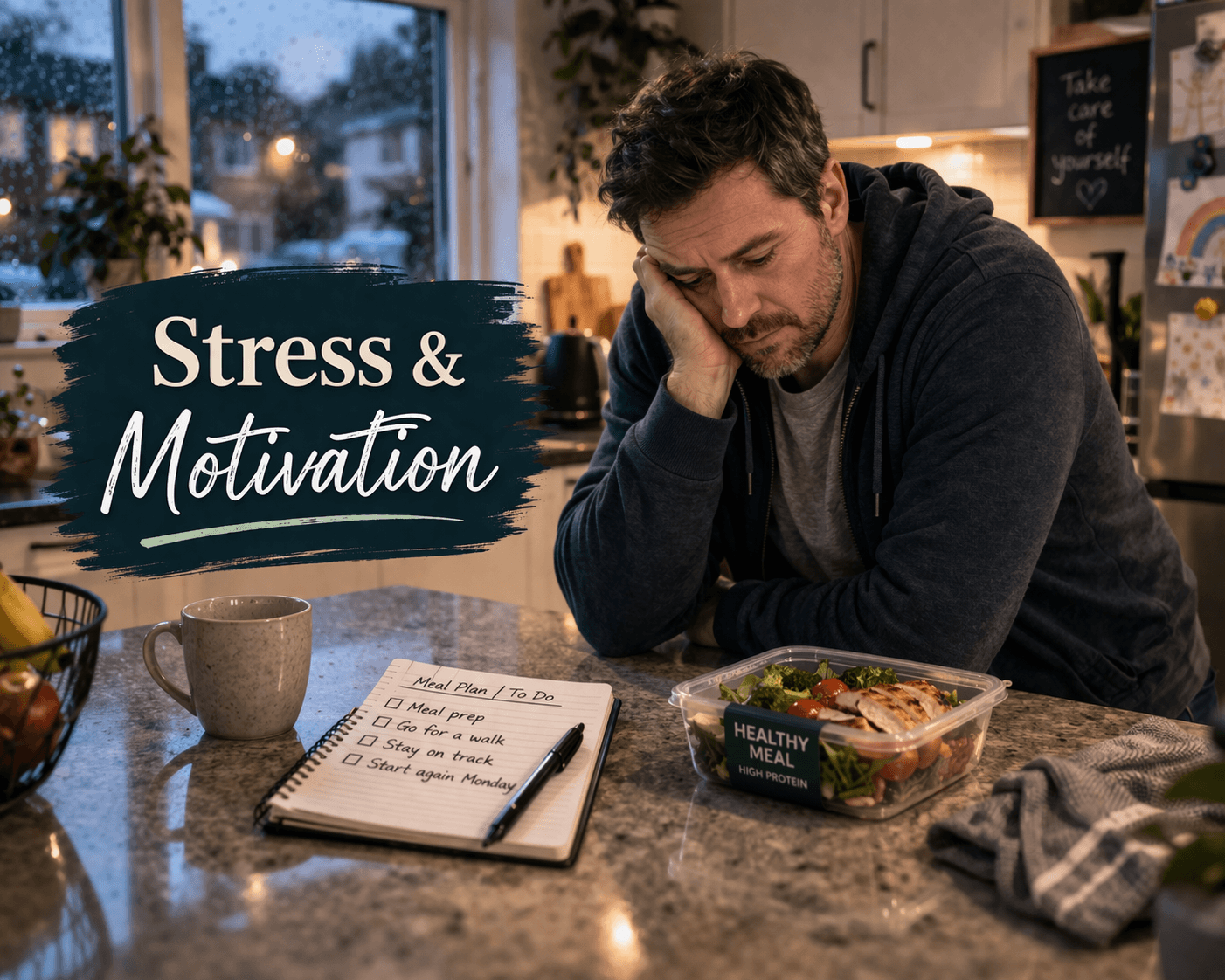
How Stress Affects Weight Loss Motivation (And Why It Feels So Hard)
Introduction
If you find your motivation comes and goes with weight loss, you’re not alone.
In real life, this often looks like starting the week with good intentions, then feeling overwhelmed by work, poor sleep, or general life pressure. By the evening, even simple things like cooking or going for a walk feel like effort.
Understanding how stress affects weight loss helps explain why motivation isn’t as reliable as it’s often made out to be.
How Stress Affects Weight Loss Motivation
When stress is high, your mental energy drops.
What tends to happen is that your brain focuses on getting through the day rather than planning meals, exercising, or sticking to routines. This isn’t a lack of discipline — it’s a natural response to pressure.
This is one of the most practical ways how stress affects weight loss in everyday life.
Why Motivation Feels So Inconsistent
A common mistake people make is relying on motivation to carry them through.
- Plan meals ahead of time
- Make balanced food choices
- Stay active throughout the day
- Stick to routines you intended to follow
These small changes can quickly slow progress without it being obvious why.
How Does Stress Affect Weight Loss Motivation? (Featured Answer)
Stress affects weight loss motivation by reducing mental energy, increasing fatigue, and disrupting routines. This makes it harder to stay consistent with meals, movement, and sleep, even when you want to make progress.
What This Looks Like in Real Life
In real life, this often shows up as a pattern rather than a single moment.
You might skip planning meals, rely on quick food choices, or decide to “start again next week.” What tends to happen is that these decisions feel small at the time, but they gradually reduce consistency.
Over time, this can make it feel like you’ve lost motivation completely, when really stress has been affecting your routine.
This builds on Can Stress Cause Belly Fat? Why It Affects Weight Loss Around Your Middle.
Why Trying Harder Usually Doesn’t Work
When motivation drops, the instinct is often to push harder.
A common mistake people make is setting stricter rules or expecting more discipline. What tends to happen is that this adds more pressure, which increases stress — making motivation even harder to maintain.
What Helps More Than Motivation
- Keeping meals simple and repeatable
- Reducing decision-making around food
- Focusing on small, consistent habits
- Allowing flexibility rather than restarting
You may also find it helpful to revisit How Stress Affects Weight Loss: Why Your Body Isn’t Responding.
Conclusion
If your motivation feels unreliable, stress may be playing a bigger role than you think.
Once you understand how stress affects weight loss, it becomes easier to shift your focus away from motivation and towards consistency. Often, that’s where real progress starts to happen.
Get weekly weight loss tips
Join our newsletter for provider updates, expert guidance, and exclusive offers — no spam.
Subscribe free