Exercise for Weight Loss: What Actually Works?
Exercise can play a powerful role in weight loss, but it's often misunderstood. This guide explains what really works, why results sometimes stall, and how to build an exercise routine you can stick to for life.
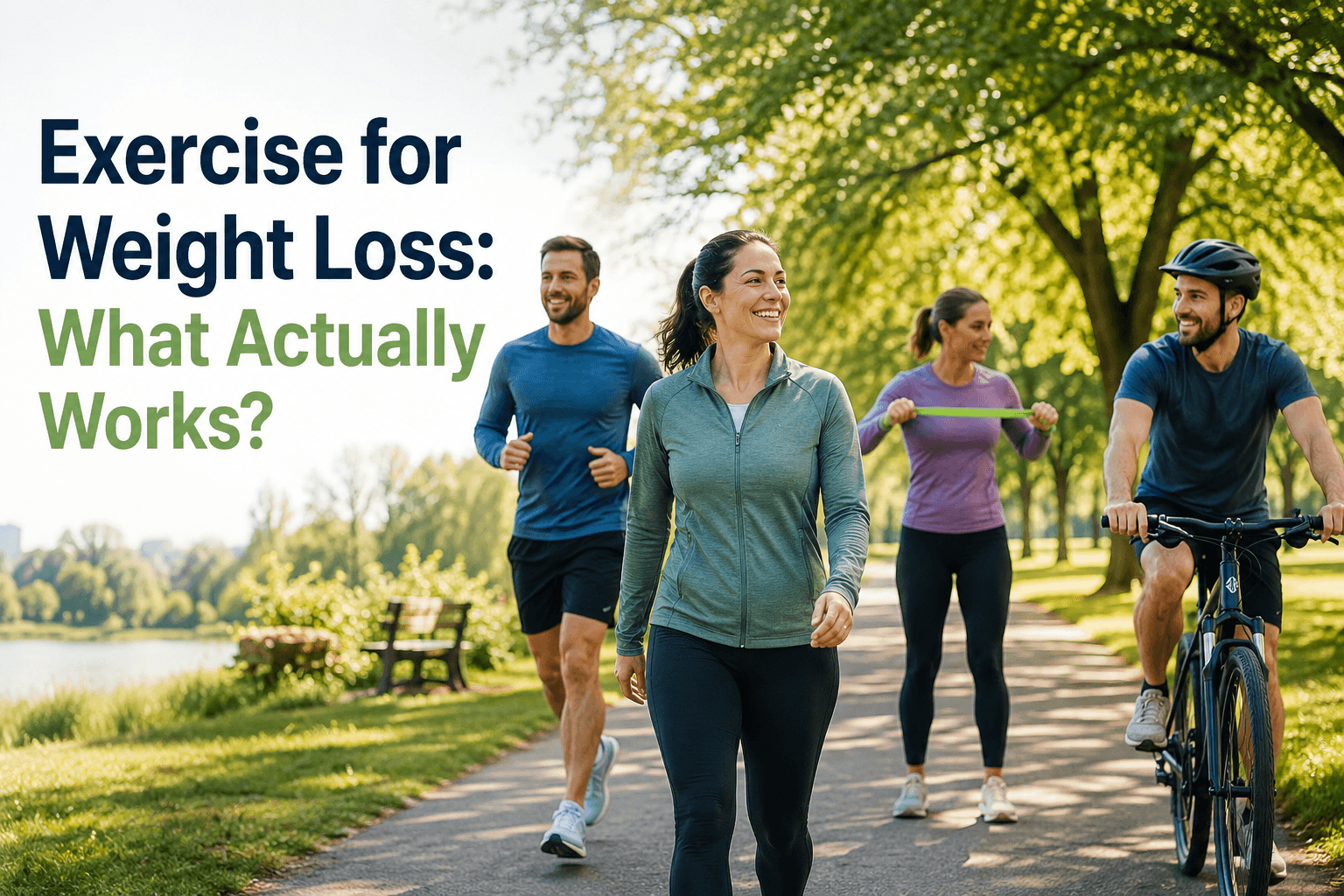
Exercise for Weight Loss: What Actually Works?
If you've ever tried to lose weight, you've probably heard the same advice over and over again: exercise more. It sounds simple enough, yet many people spend weeks walking, running or going to the gym only to feel disappointed when the scales barely move.
If that sounds familiar, you're certainly not alone.
One of the biggest misconceptions about weight loss is that exercise alone is the answer. In reality, exercise is incredibly valuable, but not always for the reasons people expect. It supports fat loss, improves your health, protects your muscles and helps you build habits that make maintaining a healthy weight much easier in the long term.
The challenge is knowing which types of exercise are worth your time and how to make them fit into everyday life.
This guide explains what exercise really does for weight loss, why progress sometimes feels slower than expected and how to build a routine that works for you rather than against you.
Featured Snippet
Exercise helps with weight loss by increasing the number of calories your body uses while improving fitness, muscle strength and overall health. The most effective exercise plan combines regular movement with healthy eating and realistic habits. Consistency matters far more than finding the perfect workout or exercising at maximum intensity every day.
Does exercise actually help you lose weight?
The simple answer is yes, but perhaps not in the way many people imagine.
Exercise burns calories, which contributes towards the calorie deficit needed for weight loss. However, most people overestimate how many calories they burn and underestimate how easily those calories can be replaced through food.
For example, a brisk 30-minute walk may burn around 150 to 200 calories depending on your size and pace. A coffee shop muffin or sugary drink can often contain considerably more than that. That doesn't mean exercise is pointless. It simply means exercise works best as part of a bigger picture rather than as a quick fix.
What exercise does brilliantly is improve the quality of your weight loss journey. It helps preserve muscle while losing body fat, supports your heart, strengthens your bones, boosts your mood and often improves sleep. Many people also notice they have more energy and feel more confident long before they notice dramatic changes on the scales.
If you're interested in understanding the relationship between movement and fat loss in more detail, our guide on How Exercise Affects Weight Loss explains exactly how the body responds to regular activity.
There isn't one "best" exercise
One of the most common questions people ask is which exercise burns the most fat.
The honest answer is that there isn't a single best choice.
Walking, swimming, cycling, strength training, dancing and team sports can all support weight loss. The exercise that delivers the best results is usually the one you genuinely enjoy enough to keep doing.
Many people begin with intense workouts because they believe they will lose weight faster. What often happens instead is they become exhausted, sore or overwhelmed, making it difficult to stay consistent.
In real life, consistency almost always beats intensity.
Someone who enjoys walking four times each week is likely to achieve better long-term results than someone who forces themselves through exhausting gym sessions before giving up completely.
If you're unsure where to begin, our article on Best Types of Exercise for Weight Loss compares different forms of exercise and explains who each one is best suited for.
Why people stop seeing results
It's completely normal for weight loss to slow down after the first few weeks. Many people assume they've reached a plateau because their exercise routine has stopped working, when in reality several things could be happening.
As your fitness improves, your body becomes more efficient at the exercises you're doing, meaning you may burn fewer calories than when you first started. You might also be moving less during the rest of the day without realising it because you're feeling tired after a workout. Small changes in appetite can also lead to eating slightly more, cancelling out some of the calories you've burned.
The scales don't always tell the full story either. Exercise can cause temporary water retention while your muscles recover, meaning your weight may stay the same—or even increase slightly—for a short time, even if you're making good progress.
Rather than chasing a lower number every week, look for other signs that your routine is working. Feeling stronger, walking further without getting out of breath, sleeping better or finding your clothes fit differently are all positive changes worth celebrating.
How to build an exercise routine you can actually stick to
The best exercise plan isn't the one that looks impressive on paper. It's the one that fits around your life.
If you're just starting out, focus on building the habit before worrying about intensity. Two or three sessions each week is far more sustainable than trying to exercise every day and giving up after a fortnight.
A balanced routine could include:
- Walking on most days.
- Two strength training sessions each week.
- An activity you genuinely enjoy, such as swimming, cycling or dancing.
- Regular rest days to allow your body to recover.
Life will always get in the way sometimes. Holidays, illness, work and family commitments can interrupt even the best routines. Missing a few workouts doesn't mean you've failed. The important thing is simply getting started again.
Common exercise mistakes to avoid
Many people make the same mistakes when trying to lose weight through exercise.
- Doing too much too soon.
- Choosing workouts they don't enjoy.
- Expecting immediate results.
- Only judging progress by the scales.
- Believing they need to exercise perfectly every week.
Weight loss isn't about finding the hardest workout. It's about building habits you can maintain for months and years rather than days and weeks.
A realistic routine that you enjoy will almost always outperform the "perfect" routine that you can't stick to.
Conclusion
Exercise isn't a magic solution for weight loss, but it's one of the most valuable tools you have.
It helps create a calorie deficit, protects muscle, improves your physical and mental health and makes it easier to maintain a healthy weight over time. More importantly, regular movement builds confidence and creates habits that support long-term success.
If you're just beginning your weight loss journey, don't worry about finding the perfect workout. Start with something you enjoy, stay consistent and allow your routine to grow naturally as your fitness improves.
Small steps repeated week after week will always achieve more than short bursts of motivation.
Get weekly weight loss tips
Join our newsletter for provider updates, expert guidance, and exclusive offers — no spam.
Subscribe free