How Alcohol Disrupts Sleep and Slows Weight Loss
Alcohol might seem harmless in the evening, but it can disrupt sleep quality and quietly slow down weight loss progress.
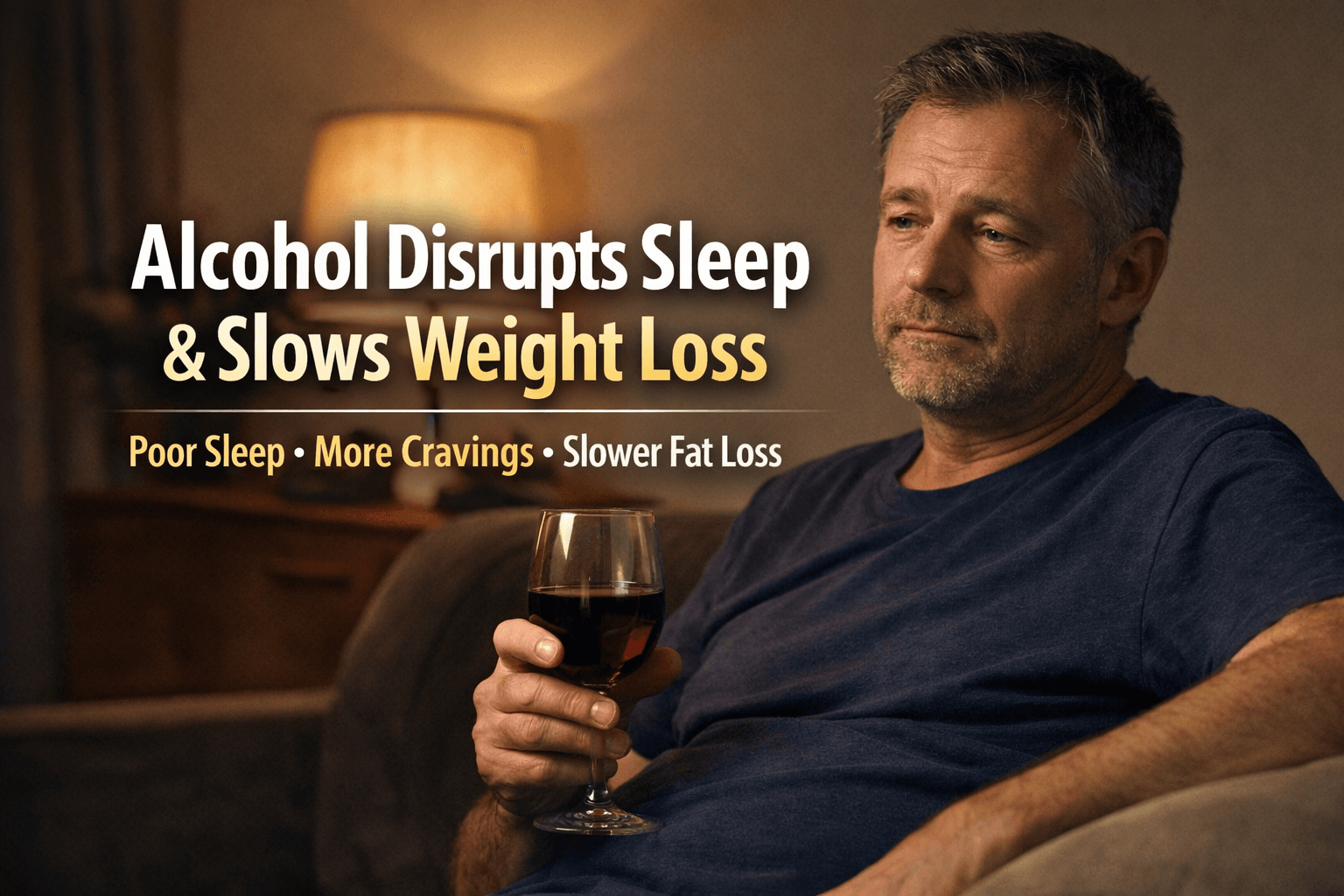
How Alcohol Disrupts Sleep and Slows Weight Loss
If you’ve ever had a drink in the evening and still woken up feeling tired, you’re not imagining it.
In real life, many people assume alcohol helps with sleep because it makes you feel relaxed and drowsy. But what tends to happen is that while it may help you fall asleep faster, it disrupts the quality of your sleep later in the night.
This is where alcohol and sleep become a problem — especially if you’re trying to lose weight.
Does Alcohol Affect Sleep Quality? (Quick Answer)
Alcohol can help you fall asleep more quickly, but it reduces deep sleep and disrupts your natural sleep cycles. This often leads to poorer sleep quality, more night-time waking and feeling less rested. As a result, appetite, cravings and energy levels can all be negatively affected the following day.
Why Alcohol Disrupts Sleep Quality
When you drink alcohol, your body prioritises breaking it down instead of maintaining healthy sleep cycles.
- deep sleep is reduced
- sleep becomes more fragmented
- you wake more easily during the night
In real life, this often looks like falling asleep quickly but waking up feeling groggy or unrested, even after what seemed like a full night’s sleep.
A common mistake people make is assuming time in bed equals good sleep — when in reality, sleep quality matters far more.
How This Affects Weight Loss the Next Day
Poor sleep has a direct impact on appetite and decision-making.
- stronger cravings for sugary or high-calorie foods
- lower motivation to exercise or stay active
- increased snacking, especially in the evening
This is where alcohol quietly slows progress — not just through calories, but through the knock-on effect of poor sleep.
If you haven’t already, it’s worth reading Why Sleep Could Be the Missing Link in Your Weight Loss.
The Real-Life Pattern Most People Miss
In the UK, alcohol is often part of evening routines — whether that’s a glass of wine after work or drinks at the weekend.
- drinking leads to later bedtimes
- sleep quality drops
- the next day feels harder to manage
If evenings are where things tend to slip, you may also find it helpful to read Why Late Nights Lead to Overeating.
What You Can Do Without Cutting It Out Completely
- avoiding alcohol close to bedtime
- having a few alcohol-free evenings each week
- drinking earlier in the evening
- being aware of evening snacking habits
The Key Takeaway
Alcohol doesn’t just affect calories — it affects how well your body recovers overnight.
Improving sleep quality often leads to better energy, fewer cravings and more consistent habits.
Have you noticed how different your next day feels after drinking? That’s often where the real impact shows.
Get weekly weight loss tips
Join our newsletter for provider updates, expert guidance, and exclusive offers — no spam.
Subscribe free