How Blue Light at Night Disrupts Sleep and Affects Weight Loss
Using screens late at night can disrupt sleep quality and impact weight loss. Learn how blue light affects your body and what to do about it.
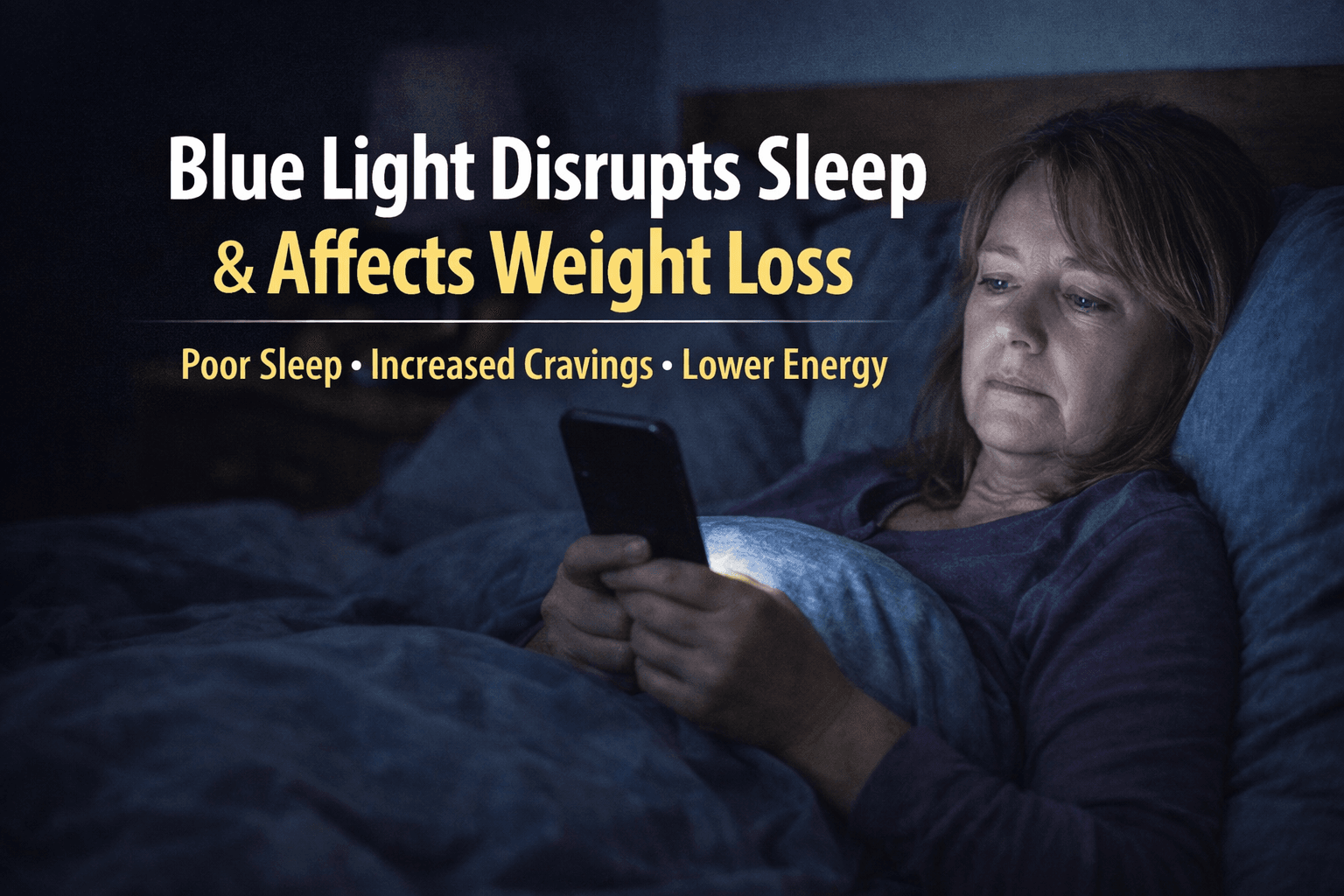
How Blue Light at Night Disrupts Sleep and Affects Weight Loss
If you find yourself scrolling on your phone late at night, you’re certainly not alone.
In real life, this has become part of many people’s evening routine — whether it’s catching up on messages, watching videos or simply unwinding. But what tends to happen is that this habit can quietly interfere with your sleep more than you realise.
And over time, that can make weight loss feel much harder.
Does Blue Light Affect Sleep? (Quick Answer)
Yes, blue light from phones, tablets and TVs can reduce the production of melatonin, the hormone that helps you fall asleep. This can delay sleep, reduce sleep quality and lead to increased tiredness, which may affect appetite, cravings and energy levels the following day.
Why Screens Make It Harder to Fall Asleep
Your body relies on natural light cues to know when it’s time to sleep.
- melatonin production is delayed
- it takes longer to fall asleep
- sleep becomes lighter and less restorative
In real life, this often looks like feeling tired but struggling to switch off once you’re in bed.
A common mistake people make is assuming they just “can’t sleep”, when in reality, their environment is working against them.
How This Impacts Weight Loss
When sleep is disrupted, it affects far more than just energy levels.
- increased hunger the next day
- stronger cravings for quick, high-energy foods
- lower motivation to move or exercise
If you haven’t already, it’s worth reading Why Sleep Could Be the Missing Link in Your Weight Loss.
The Evening Habit Most People Overlook
In real life, screen use often overlaps with other habits that impact weight loss.
- scrolling leads to staying up later than planned
- late nights create more opportunities to snack
- routines become inconsistent
If evenings tend to slip, you may also find it helpful to read Why Late Nights Lead to Overeating.
Simple Ways to Reduce Blue Light Impact
- reducing screen time 30–60 minutes before bed
- using night mode or blue light filters
- setting a consistent “wind-down” time
- replacing scrolling with a calmer habit
The Key Takeaway
Blue light doesn’t just affect when you fall asleep — it affects how well you sleep.
Improving your evening routine can lead to better rest, more stable energy and easier weight loss over time.
Have you noticed how much easier it is to sleep when you stay off your phone? That’s often where the biggest difference starts.
Get weekly weight loss tips
Join our newsletter for provider updates, expert guidance, and exclusive offers — no spam.
Subscribe free