Why Poor Sleep Increases Stress Eating (And How to Stop It)
Poor sleep can increase stress levels and lead to emotional eating. Learn why it happens and how to regain control.
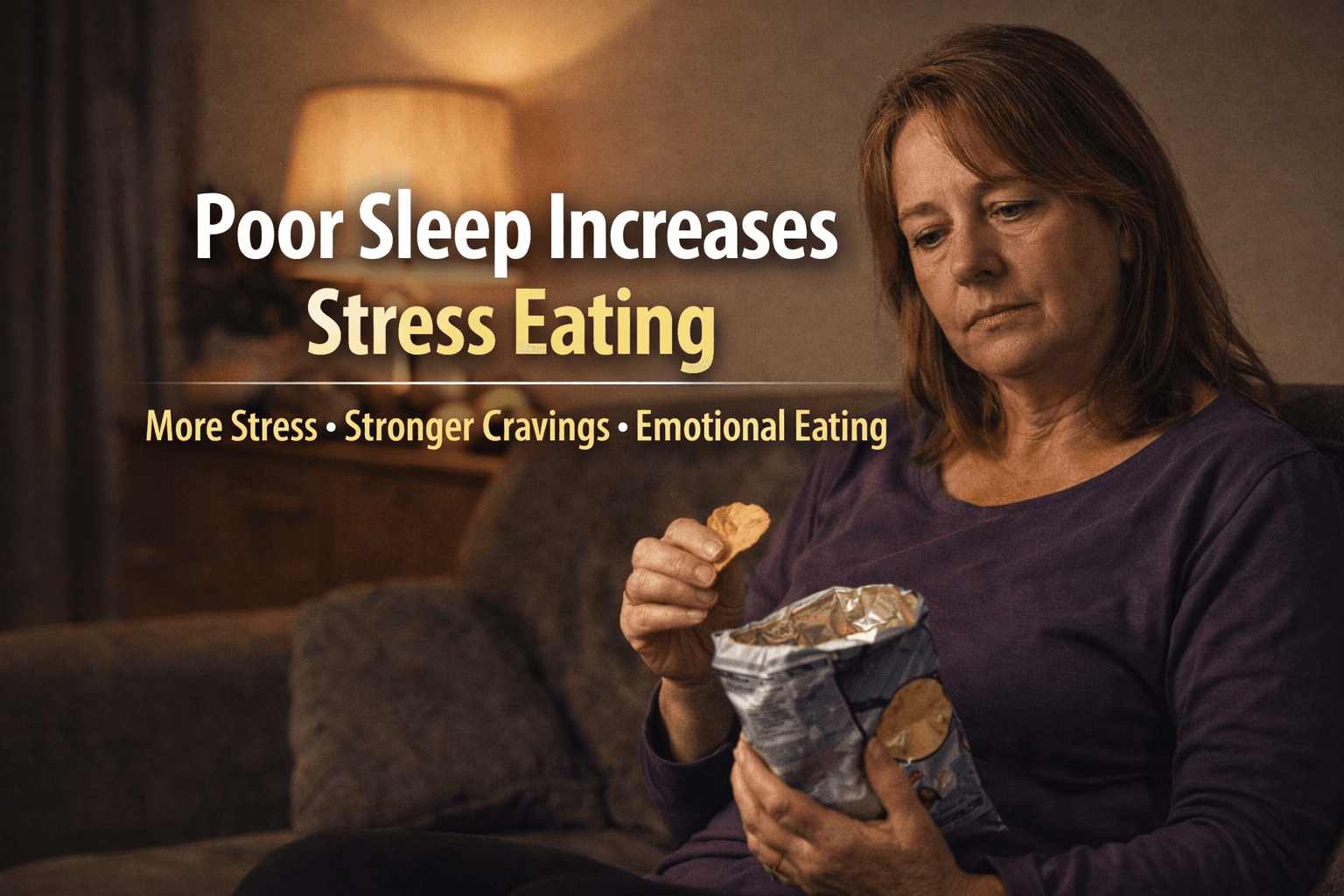
Why Poor Sleep Increases Stress Eating (And How to Stop It)
If you’ve ever found yourself reaching for food after a stressful day, especially when you’re tired, you’re not alone.
In real life, stress eating is rarely just about food. What tends to happen is that when sleep is poor, your ability to cope with stress weakens, making food feel like the easiest form of comfort.
This is where poor sleep and emotional eating often become closely linked.
Does Poor Sleep Cause Stress Eating? (Quick Answer)
Yes, poor sleep can increase stress hormones like cortisol, which can trigger emotional eating. When you’re tired, your brain looks for quick comfort and energy, often leading to cravings for sugary or high-calorie foods. This can make it harder to manage eating habits consistently.
Why Sleep and Stress Are So Closely Connected
When you don’t sleep well, your body becomes more sensitive to stress.
- cortisol levels rise
- emotional resilience drops
- small problems feel more overwhelming
In real life, this often looks like feeling more reactive, irritable or mentally drained the next day.
A common mistake people make is assuming stress eating is purely a willpower issue, when in reality, it’s often driven by fatigue.
Why Food Becomes the Go-To Comfort
When stress levels rise, your brain naturally looks for ways to feel better quickly.
- cravings for comfort foods increase
- eating becomes more automatic
- stopping feels harder once you start
This is especially common in the evening when both stress and tiredness peak.
If you haven’t already, it’s worth reading Why Sleep Could Be the Missing Link in Your Weight Loss.
The Evening Stress Pattern
In real life, stress eating often follows a predictable pattern.
- the day feels busy or overwhelming
- you push through while staying on track
- in the evening, fatigue catches up
- eating becomes a way to unwind
If evenings are where this tends to happen, you may also find it helpful to read Why Late Nights Lead to Overeating.
How to Break the Stress Eating Cycle
- improving sleep consistency
- creating a simple evening routine
- recognising emotional triggers
- pausing before reacting to cravings
The Key Takeaway
Stress eating is often a response to poor sleep, not a lack of discipline.
When your body is rested, it becomes much easier to manage cravings and make balanced decisions.
Have you noticed how much harder it feels to stay on track when you’re tired? That’s often where the real challenge begins.
Get weekly weight loss tips
Join our newsletter for provider updates, expert guidance, and exclusive offers — no spam.
Subscribe free