Why Shift Work Can Make Weight Loss Harder
Shift work can disrupt sleep, appetite and routine, making weight loss much harder than it looks from the outside.
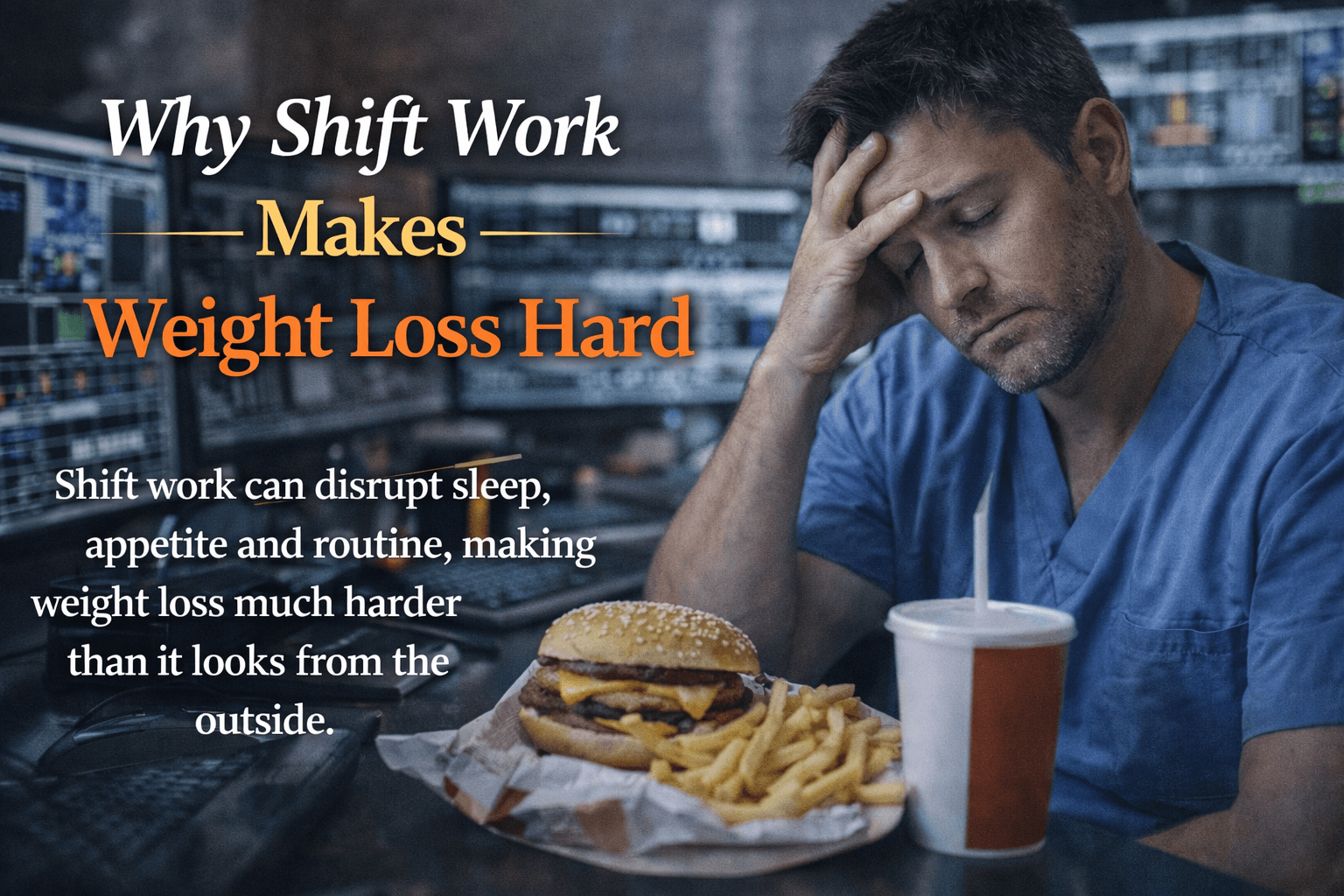
Why Shift Work Can Make Weight Loss Harder
If you work shifts, you’ll already know that standard health advice often sounds easier on paper than it feels in real life.
When your sleep is irregular, your meals move around and your body clock is constantly adjusting, weight loss can feel far harder than it should.
This isn’t just about routine — shift work can affect hunger, energy, sleep quality and food choices all at once.
Why Shift Work Disrupts Weight Loss
Your body thrives on rhythm. It likes regular sleep, regular light exposure and regular meals.
Shift work breaks that pattern, which can make appetite and energy more difficult to manage.
- sleep quality often drops
- hunger hormones become less balanced
- fatigue makes convenience foods more tempting
If you’d like the full picture first, read Why Sleep Could Be the Missing Link in Your Weight Loss.
What It Often Looks Like in Real Life
In real life, shift workers often eat at unusual times, rely on quick snacks and struggle to maintain a consistent sleep schedule.
A common mistake people make is blaming themselves for not being “disciplined enough”, when their body is simply fighting tiredness and disruption.
Why Hunger and Cravings Feel Worse
When sleep is broken or shortened, ghrelin tends to rise and leptin tends to fall, which can make hunger stronger and fullness weaker.
If this is something you notice, it’s worth reading How Sleep Controls Hunger Hormones and How Poor Sleep Triggers Cravings and Overeating.
How to Make Things Easier
- keep meal timing as consistent as your shifts allow
- prioritise sleep after shifts, even if the timing is unusual
- prepare easy meals before busy runs of shifts
- limit grazing when tired
The Key Takeaway
If you work shifts, weight loss may be harder — but that doesn’t mean it’s impossible.
The key is building realistic routines that support sleep and energy, rather than expecting your body to behave as if you work nine to five.
Get weekly weight loss tips
Join our newsletter for provider updates, expert guidance, and exclusive offers — no spam.
Subscribe free