How to Reduce Stress for Weight Loss (Without Making Life More Complicated)
Reducing stress doesn’t need to be complicated. Learn how stress affects weight loss and how simple changes can make progress easier.
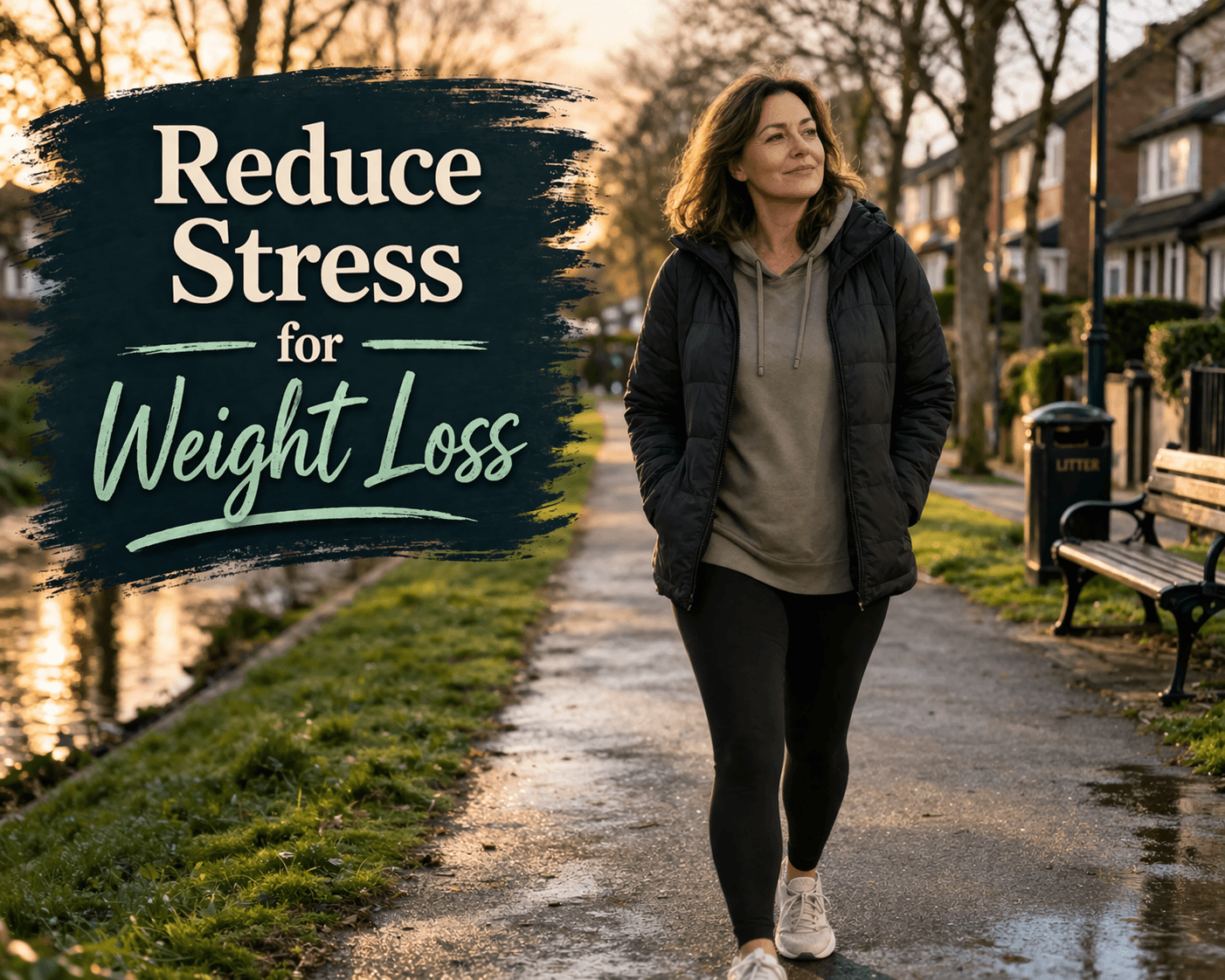
How to Reduce Stress for Weight Loss (Without Making Life More Complicated)
Introduction
If stress is getting in the way of your weight loss, it can feel difficult to know where to start.
In real life, this often looks like wanting to “manage stress better” but not having the time, energy, or space for anything complicated. When life is already busy, even good advice can feel unrealistic.
Understanding how stress affects weight loss is one thing — knowing how to reduce it in a practical way is where things start to change.
Why Reducing Stress Helps Weight Loss
Stress affects more than just how you feel.
What tends to happen is that stress influences your sleep, appetite, food choices, and energy levels. Even small improvements in these areas can make it easier to stay consistent.
This is why reducing stress can support weight loss without needing to change everything else at once.
Why Simple Changes Work Best
A common mistake people make is thinking stress management needs to be perfect.
In reality, trying to follow strict routines or ideal habits often adds more pressure. What tends to work better is making small changes that fit into your normal day.
This is a more realistic way to manage how stress affects weight loss over time.
How Can You Reduce Stress for Weight Loss? (Featured Answer)
You can reduce stress for weight loss by focusing on simple, repeatable habits that support sleep, routine, and recovery. Small changes such as regular meals, short walks, and calmer evenings can reduce daily stress and make healthy choices easier to maintain.
What This Looks Like in Real Life
In real life, reducing stress doesn’t need to be complicated.
- Going to bed slightly earlier when possible
- Keeping meals more regular
- Taking a short walk to reset your day
- Creating a calmer evening routine
These small habits may not feel significant, but they often improve energy, hunger, and consistency.
This links naturally with How Stress Affects Weight Loss Motivation (And Why It Feels So Hard).
Where to Start First
If you’re not sure where to begin, it helps to focus on what feels most manageable.
- If you’re tired, start with sleep
- If evenings feel chaotic, simplify meals
- If your day feels overwhelming, add a small break or walk
You may also find it helpful to revisit Can Stress Slow Down Weight Loss? Why Progress Feels Stuck.
Conclusion
Reducing stress for weight loss doesn’t need to involve big changes.
Once you understand how stress affects weight loss, it becomes easier to focus on small, practical improvements. Over time, these are often what make consistency feel easier — and progress more sustainable.
Get weekly weight loss tips
Join our newsletter for provider updates, expert guidance, and exclusive offers — no spam.
Subscribe free