How Stress Affects Weight Loss for Women Over 40 (And Why It Feels Different)
For women over 40, stress can affect weight loss in more noticeable ways. Here’s why progress feels different and what actually helps.
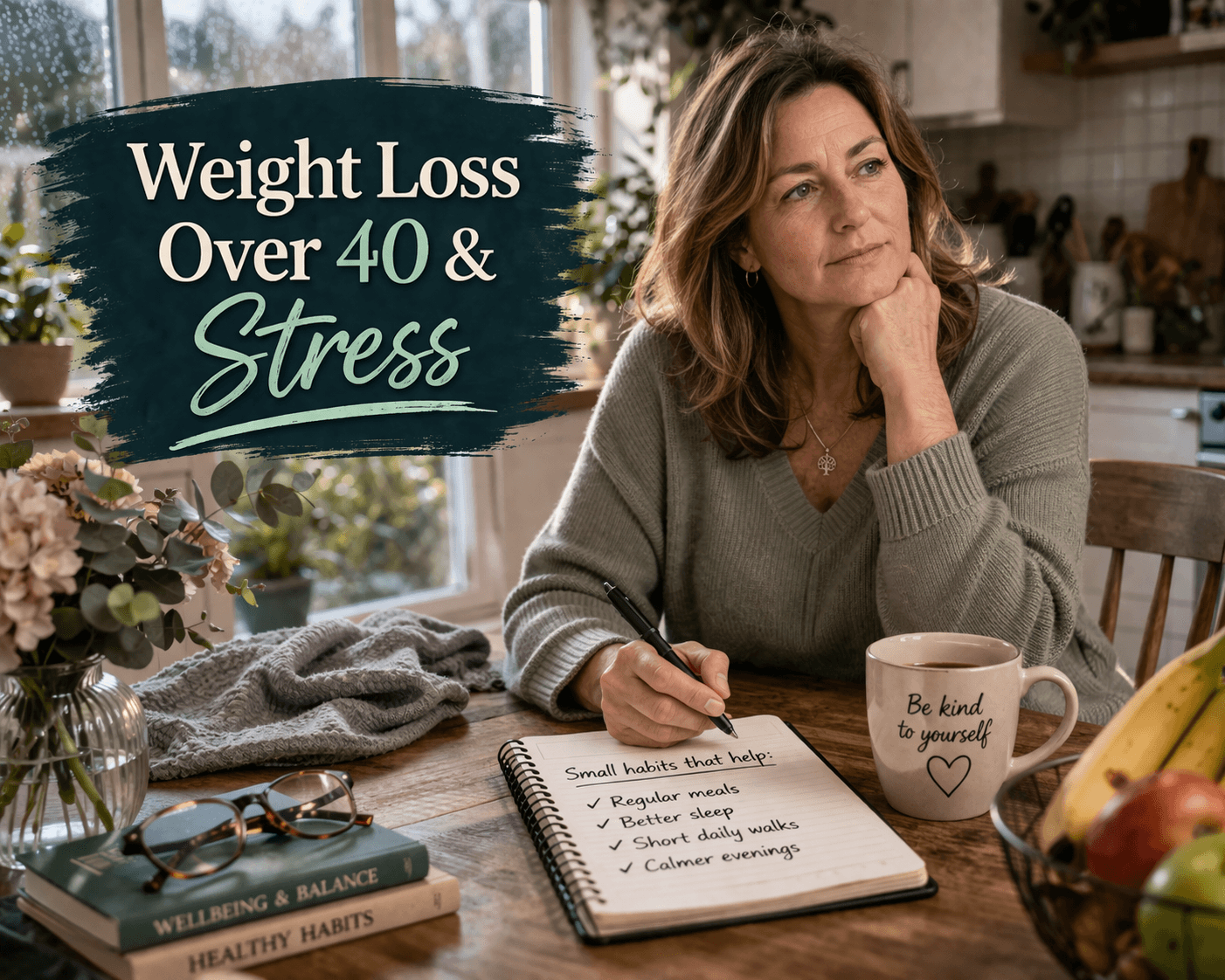
How Stress Affects Weight Loss for Women Over 40 (And Why It Feels Different)
Introduction
If weight loss feels harder than it used to, it can be difficult to understand why.
In real life, this often looks like juggling work, family responsibilities, and everyday pressures while trying to stay consistent with food and exercise. Even when you’re making an effort, progress can feel slower or less predictable.
Understanding how stress affects weight loss becomes especially important for women over 40, where small changes can have a bigger impact.
How Stress Affects Weight Loss Over 40
Stress affects the same systems at any age, but its impact can feel more noticeable over time.
What tends to happen is that recovery becomes more important, sleep becomes lighter, and energy levels fluctuate more throughout the day. When stress is layered on top of this, it can make routines harder to maintain.
This is one of the key ways how stress affects weight loss in this stage of life.
Why Progress Feels Different
A common mistake people make is assuming they need to work harder than before.
- Sleep quality and recovery
- Hunger and cravings
- Energy for movement
- Patience for planning meals
- Consistency across the week
Even small shifts in these areas can make weight loss feel slower, even if your effort hasn’t changed.
How Does Stress Affect Weight Loss for Women Over 40? (Featured Answer)
Stress affects weight loss for women over 40 by disrupting sleep, increasing cravings, lowering energy, and making daily routines harder to maintain. Over time, this reduces consistency, which can make fat loss feel slower and less predictable.
What This Looks Like in Real Life
In real life, this often shows up as feeling more tired than expected, relying on quick food choices, or finding it harder to stay consistent with exercise.
What tends to happen is that these small changes feel manageable on their own, but together they affect progress over time.
This connects closely with Can Stress Slow Down Weight Loss? Why Progress Feels Stuck.
Why Stricter Approaches Often Backfire
When progress slows, it’s natural to try and do more.
A common mistake people make is cutting calories further or adding more exercise. What tends to happen is that this increases pressure, which adds to stress and makes routines harder to sustain.
What Helps More
- Keeping meals simple and regular
- Prioritising sleep where possible
- Focusing on walking or low-pressure movement
- Avoiding all-or-nothing thinking
You may also find it helpful to revisit How to Reduce Stress for Weight Loss (Without Making Life More Complicated).
Conclusion
If weight loss feels different over 40, stress may be playing a bigger role than you realise.
Once you understand how stress affects weight loss, it becomes easier to adjust your approach. Often, a calmer and more consistent routine works far better than trying to push harder.
Get weekly weight loss tips
Join our newsletter for provider updates, expert guidance, and exclusive offers — no spam.
Subscribe free