How Nutrition Impacts Weight Loss Beyond Calories
Nutrition affects weight loss in more ways than calories alone. Learn how protein, fibre, and appetite regulation support sustainable results, especially when using GLP-1 medications.
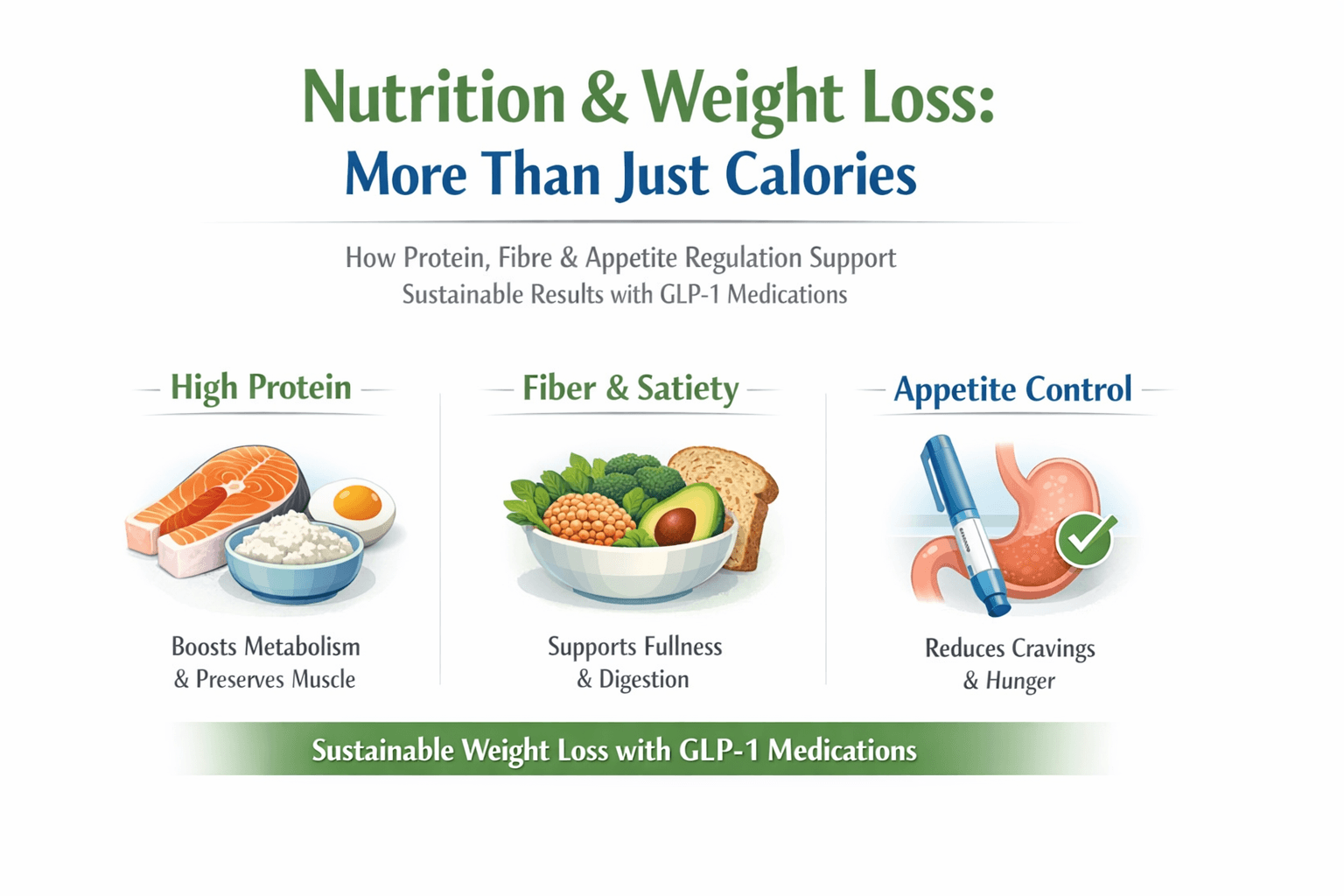
Weight loss is often described as a simple balance between calories in and calories out. While energy balance does play a role, this explanation does not fully reflect how the body regulates hunger, fullness, and food intake.
The quality and composition of your nutrition can have a significant impact on how easy or difficult weight loss feels. For a broader overview of sustainable nutrition, see our guide Nutrition for Sustainable Weight Loss: A UK Clinical Pillar Guide.
Why calories do not tell the full story
Not all calories affect the body in the same way. Meals that are low in protein and fibre may be digested quickly, leading to a return of hunger soon after eating. In contrast, meals that include protein, fibre, and balanced nutrients can help you feel full for longer.
This difference influences appetite, energy levels, and the likelihood of overeating later in the day.
How nutrition affects appetite
Appetite is regulated by a combination of hormones, including those that signal hunger and fullness. The types of foods you eat can influence how these signals behave.
Diets that are low in protein or fibre may increase hunger, while meals that are more balanced can support satiety and reduce the urge to snack frequently. To understand this in more detail, see our article Understanding Hunger Hormones: Ghrelin, Leptin and Appetite.
The role of protein in weight loss
Protein plays an important role in helping you feel full and maintaining muscle mass during weight loss. This is particularly important when overall calorie intake is reduced.
Higher protein meals can also help reduce cravings and support more stable eating patterns. You can explore this further in Protein and Weight Loss: Why It Matters More Than You Think.
The importance of fibre
Fibre supports fullness by slowing digestion and helping regulate blood sugar levels. It also plays a role in gut health, which may influence appetite and metabolism.
Many adults in the UK do not meet recommended fibre intake levels, which may make appetite harder to manage. For more detail, see Fibre and Fullness: The Missing Piece in Most Diets.
Blood sugar and energy stability
Meals that are high in refined carbohydrates and low in protein or fibre can lead to rapid increases and drops in blood sugar. This may result in increased hunger, cravings, and lower energy levels.
Balanced meals that include protein, fibre, and healthy fats can help maintain more stable energy and reduce fluctuations in appetite.
Nutrition while using weight loss medication
Medications such as Wegovy and Mounjaro reduce appetite, which can make it easier to eat less. However, this also means it becomes more important to prioritise nutrient-dense foods.
Focusing on protein, fibre, and hydration can help ensure your body continues to receive the nutrients it needs, even with reduced food intake. For practical guidance, see What to Eat on GLP-1 Medications.
Sustainable nutrition over restriction
Highly restrictive diets may lead to short term weight loss but are often difficult to maintain. They can also increase hunger and reduce energy levels over time.
A more sustainable approach focuses on consistency, balanced meals, and gradual improvements in eating habits rather than extreme changes.
How to use this information
Rather than focusing only on calorie counting, consider how your meals are structured. Including protein, fibre, and balanced nutrients can make weight loss feel more manageable and support long term success.
To build practical habits, see What a Balanced Plate Looks Like and Portion Sizes Made Simple.
Further reading
• NHS Eatwell Guide
• British Dietetic Association resources
• NICE guidance on weight management
Get weekly weight loss tips
Join our newsletter for provider updates, expert guidance, and exclusive offers — no spam.
Subscribe free