What to Eat on GLP-1 Medications
GLP-1 medications reduce appetite, which makes every meal count more. This practical guide explains which foods to prioritise on Wegovy or Mounjaro to support muscle, fullness, and long-term results.
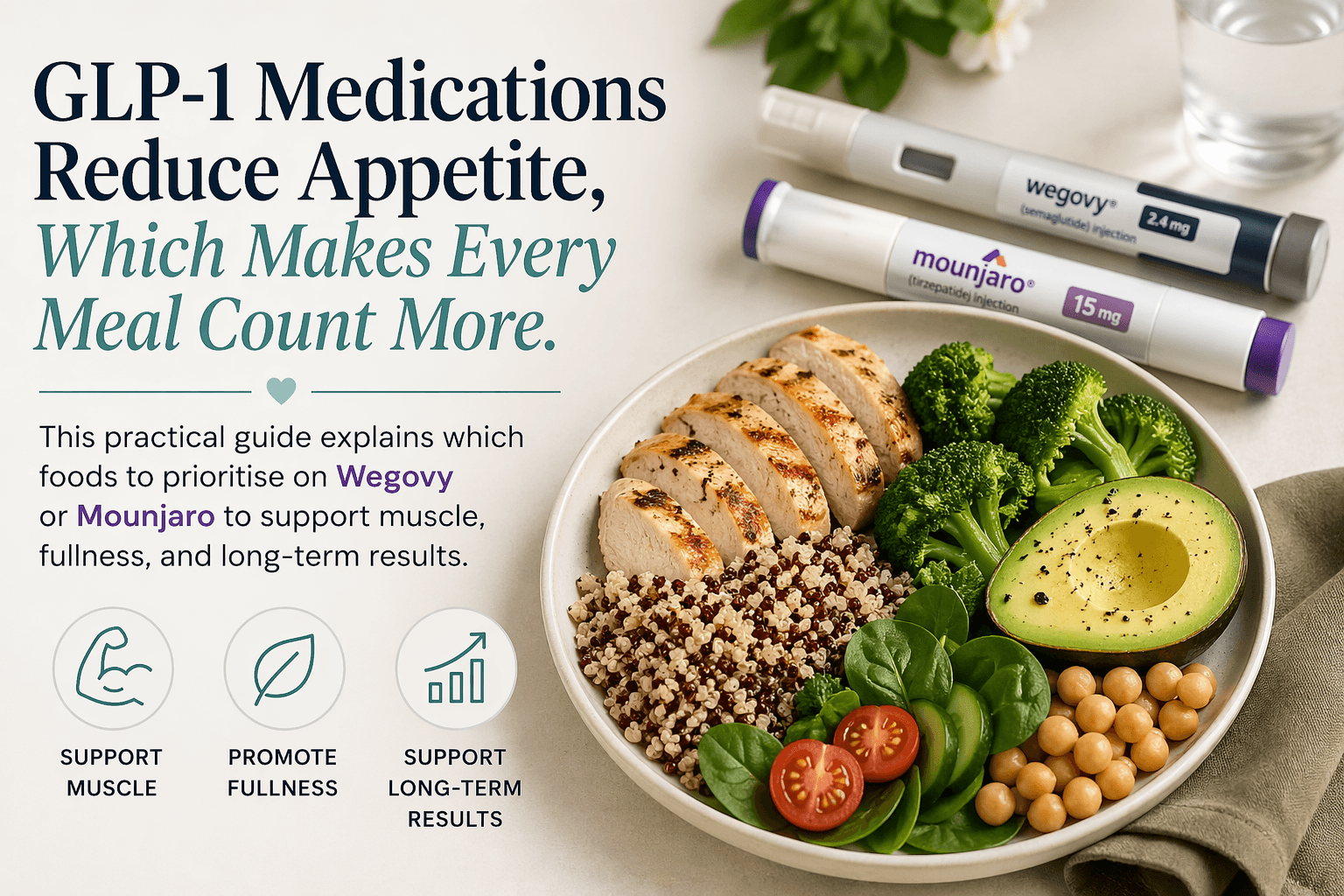
GLP-1 medications such as Wegovy (semaglutide) and Mounjaro (tirzepatide) can significantly reduce appetite. For many people, this is the first time in years that hunger feels manageable. But eating less also means that what you do eat matters more than ever.
This guide explains which foods tend to work well on GLP-1 medication — not as a rigid plan, but as a practical framework to help you feel well, maintain muscle, and get the most from your treatment. For a broader overview of nutrition during weight loss, see Nutrition for Sustainable Weight Loss: A UK Clinical Pillar Guide.
Why food choices matter more on GLP-1 medication
GLP-1 medications slow gastric emptying and reduce hunger signals, which means most people eat considerably less. When overall intake drops, there is a real risk of not getting enough protein, fibre, or key micronutrients.
This is not about eating perfectly. It is about making the meals you do eat as nourishing as possible, so your body has what it needs to lose fat rather than muscle, maintain energy, and feel well day to day.
Prioritise protein at every meal
Protein is the most important nutrient to focus on when taking GLP-1 medication. It supports muscle preservation during weight loss, helps you feel satisfied between meals, and requires more energy to digest than fats or carbohydrates.
Good sources of protein include eggs, chicken, turkey, fish, Greek yoghurt, cottage cheese, lentils, chickpeas, tofu, and edamame. Aim to include a palm-sized portion of protein at each meal, even when appetite is low. For more detail on why protein matters, see Protein and Weight Loss: Why It Matters More Than You Think.
Include fibre-rich foods to support fullness and digestion
Fibre helps regulate appetite, supports gut bacteria, and slows digestion — all of which can help you feel satisfied on smaller portions. It also supports digestive comfort, which can be relevant for people experiencing GLP-1 side effects such as constipation.
Fibre-rich foods include vegetables, fruit, oats, wholegrain bread and pasta, lentils, beans, and seeds. Including a variety of these foods across the day does not require large portions — small amounts add up meaningfully. For more information, see Fibre and Fullness: The Missing Piece in Most Diets.
What a balanced meal looks like on GLP-1 medication
Because portions are often smaller on medication, the structure of each meal becomes more important. A practical approach is to build meals around three components:
A protein source — such as eggs, fish, chicken, legumes, or dairy. A fibre source — such as vegetables, salad, fruit, or wholegrains. A small amount of healthy fat — such as olive oil, avocado, nuts, or seeds.
This combination supports satiety, slows digestion, and provides a broader range of nutrients within a smaller meal. For a visual guide, see What a Balanced Plate Looks Like (UK Guide).
Foods that tend to work well in smaller portions
Some foods are particularly practical when appetite is reduced, because they are nutrient-dense and easy to eat in small amounts. These include Greek yoghurt, eggs, tinned fish such as salmon or sardines, soft cooked lentils, smooth nut butters, avocado, and soft-cooked vegetables.
These are not the only good options — this is simply a starting point for days when appetite is very low and you want to make a small meal count.
Foods that may cause discomfort
GLP-1 medications slow digestion. For some people, this means that very large, very fatty, or very rich meals can cause nausea, bloating, or discomfort. This varies between individuals and tends to improve over time.
If you notice discomfort after eating, it can be helpful to try smaller, more evenly spaced meals, eat slowly and chew thoroughly, and reduce portion sizes of very high-fat foods temporarily. This is not about avoiding certain foods permanently — it is about finding what feels comfortable during the adjustment period.
Hydration on GLP-1 medication
Reduced appetite can also reduce awareness of thirst, and some people find they drink less without noticing. Staying hydrated supports digestion, energy levels, and general wellbeing.
Water, herbal teas, and diluted drinks all count. Keeping a glass of water nearby as a visual prompt can be a simple and effective habit, particularly on days when appetite is very low.
A note on nutritional adequacy
If your appetite is significantly reduced and you are eating very little for extended periods, it is worth speaking with a healthcare professional or registered dietitian. They can help ensure your nutritional needs are being met and advise on whether any supplementation is appropriate for your circumstances.
For more on how nutrition supports the effectiveness of weight loss medication, see Eating Well While Using Wegovy or Mounjaro: A Practical Nutrition Guide.
Get weekly weight loss tips
Join our newsletter for provider updates, expert guidance, and exclusive offers — no spam.
Subscribe free