Meal Timing: Does It Matter for Weight Loss?
Does when you eat affect weight loss? Learn how meal timing, fasting, and eating patterns influence appetite, energy, and long-term results.
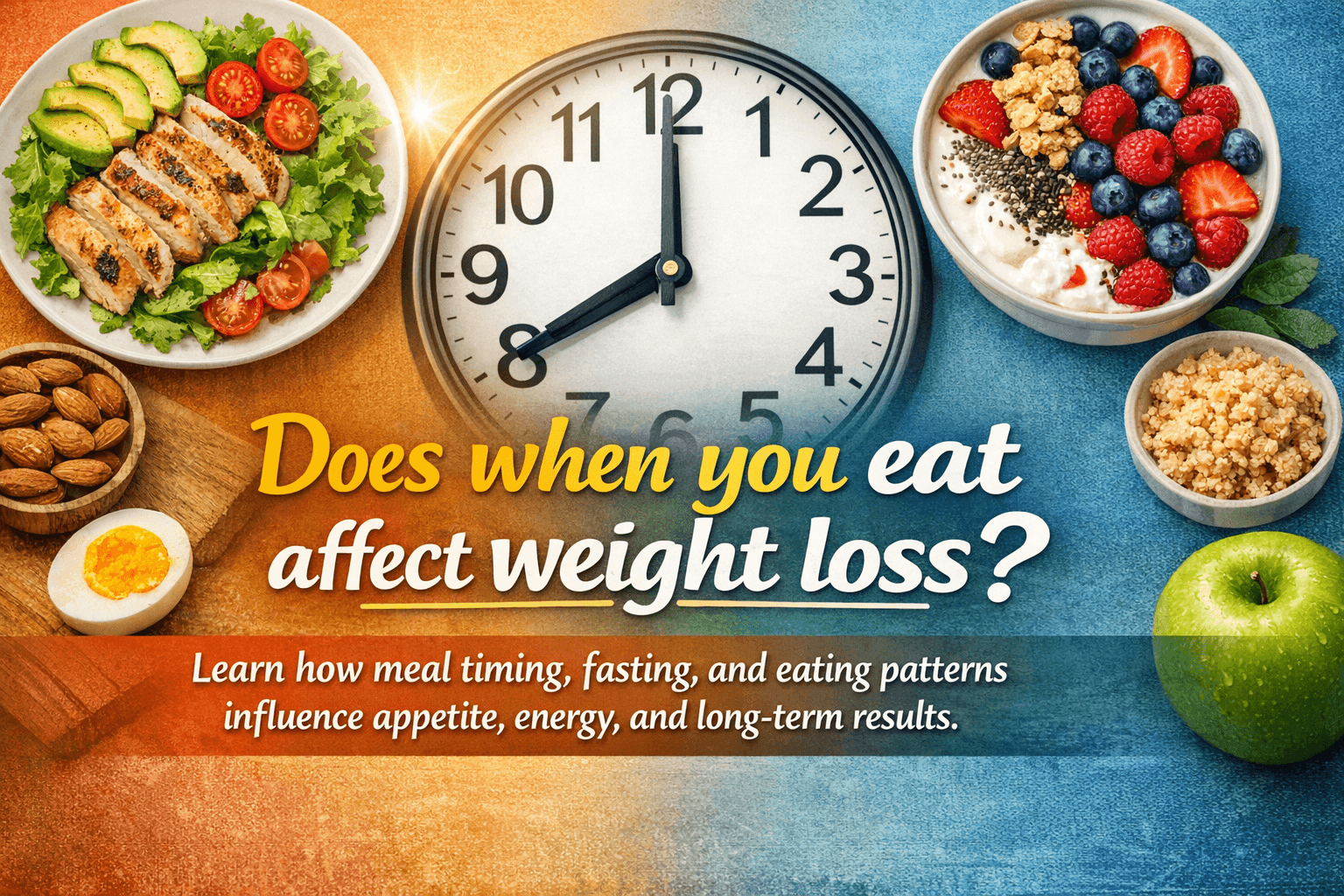
Meal timing is often discussed as a key factor in weight loss, with approaches such as intermittent fasting gaining popularity. While timing can influence how you feel and eat, it is not usually the most important factor for long term weight loss.
Understanding how meal timing fits into the bigger picture can help you choose an approach that is realistic and sustainable. For a broader overview, see Nutrition for Sustainable Weight Loss: A UK Clinical Pillar Guide.
Does meal timing affect weight loss
Weight loss is primarily influenced by overall energy balance over time. However, meal timing can affect appetite, energy levels, and eating behaviour, which may indirectly influence results.
The most effective approach is usually one that supports consistency and helps you manage hunger.
Regular meals vs irregular eating
Eating regular meals can help stabilise hunger and reduce the likelihood of overeating later in the day. Long gaps between meals may lead to increased hunger, which can make food choices more difficult.
Some people feel more balanced with three meals per day, while others prefer including snacks. See Smart Snacking: What to Eat Between Meals.
Intermittent fasting
Intermittent fasting involves limiting the time window in which you eat. Some people find this helpful for reducing overall intake, while others may find it difficult to maintain.
There is no clear evidence that intermittent fasting is superior to other approaches when overall intake is similar. The best approach is one that fits your routine and supports consistency.
Meal timing and appetite
Irregular eating patterns can affect hunger hormones and appetite regulation. Skipping meals may lead to increased hunger later, which can result in larger portions or less balanced choices.
To understand this further, see Understanding Hunger Hormones: Ghrelin, Leptin and Appetite.
Breakfast: is it essential
There is no single rule that everyone must eat breakfast. Some people feel better eating in the morning, while others prefer to delay their first meal.
What matters more is your overall eating pattern and whether it helps you maintain stable energy and appetite.
Evening eating and weight loss
Eating later in the evening is often linked to weight gain, but this is usually related to total intake rather than timing alone.
Late eating may be associated with snacking, lower awareness of portion sizes, or eating out of habit rather than hunger.
Meal timing on weight loss medication
If you are using medications such as Wegovy or Mounjaro, appetite may be reduced and meal patterns may change naturally.
Some people prefer smaller, more frequent meals, while others feel comfortable eating less often. The key is ensuring adequate nutrition, particularly protein and fibre.
For more guidance, see What to Eat on GLP-1 Medications.
Consistency over timing perfection
Rather than focusing on exact meal times, it is often more helpful to build a consistent eating pattern that supports your lifestyle.
This might include:
• Regular meals at similar times each day
• Balanced meals that support fullness
• Planned snacks if needed
• Avoiding long periods of extreme hunger
How to find the right approach
There is no single ideal meal timing strategy. The best approach depends on your preferences, schedule, and how your body responds.
Paying attention to hunger, energy levels, and consistency can help guide your decisions.
How to use this information
If you are unsure where to start, focus first on building balanced meals and a consistent eating pattern. Meal timing can then be adjusted based on what feels most sustainable.
To support this, see What a Balanced Plate Looks Like and How to Build High-Protein Meals Easily.
Further reading
• NHS Eatwell Guide
• British Dietetic Association resources
• NICE guidance on weight management
Get weekly weight loss tips
Join our newsletter for provider updates, expert guidance, and exclusive offers — no spam.
Subscribe free