Common Nutrition Myths That Sabotage Weight Loss
Many common nutrition myths can make weight loss harder than it needs to be. Learn what actually works and what to ignore.
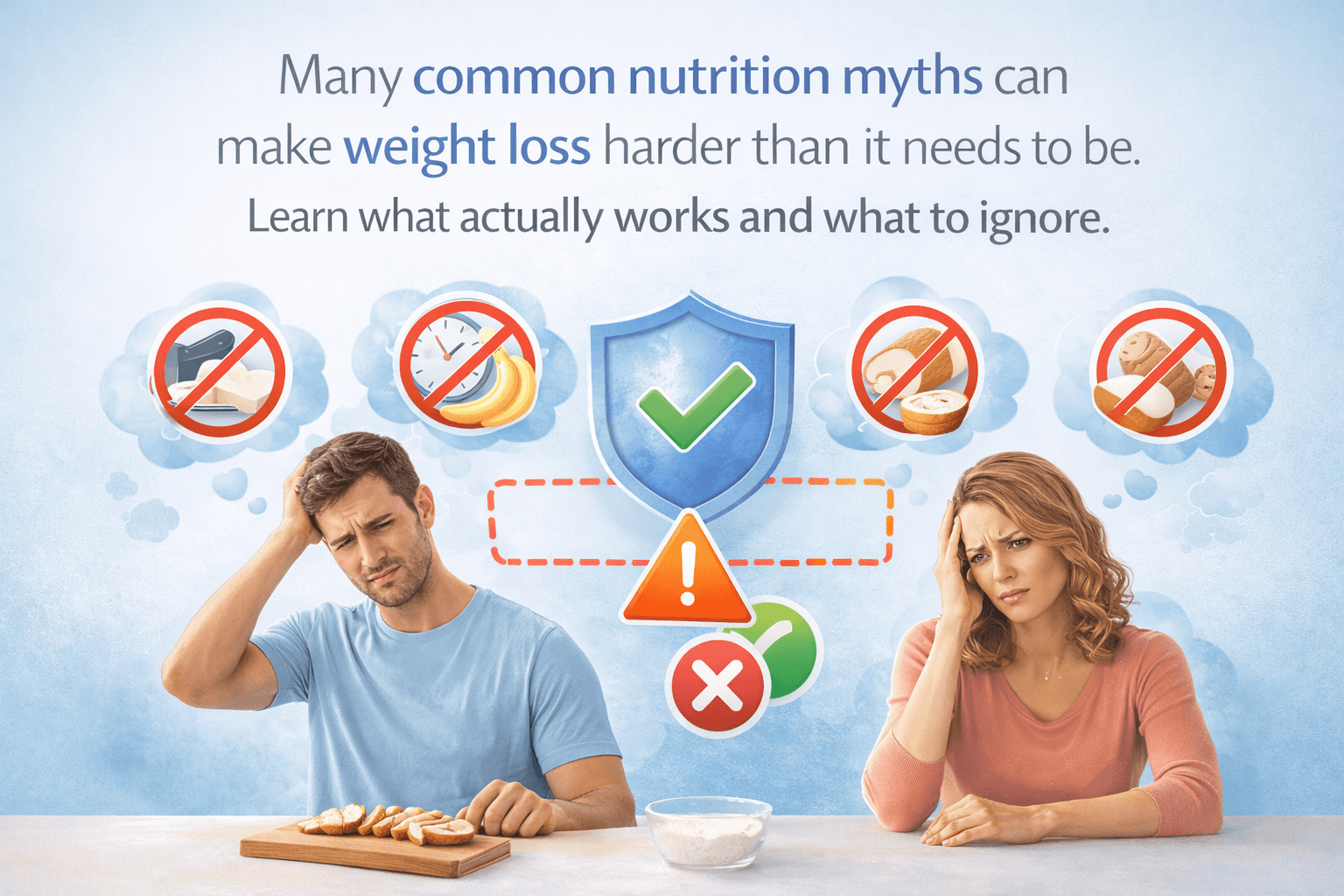
There is no shortage of nutrition advice online, but not all of it is accurate. In fact, many widely believed ideas about weight loss can make progress harder, not easier.
Understanding which advice to trust can help you focus on what actually works and avoid unnecessary frustration. For a broader overview, see Nutrition for Sustainable Weight Loss: A UK Clinical Pillar Guide.
Myth 1: Carbohydrates cause weight gain
Carbohydrates are often blamed for weight gain, but they are not inherently problematic. Wholegrain carbohydrates can provide energy, fibre, and important nutrients.
Weight gain is more closely linked to overall energy balance and eating patterns rather than a single nutrient. For a practical approach, see What a Balanced Plate Looks Like.
Myth 2: You need to cut calories as low as possible
Very low calorie diets may lead to rapid weight loss, but they are often difficult to sustain and can increase hunger over time.
A more balanced approach supports steady progress and is easier to maintain. To understand this further, see Calories Explained: Do You Need to Count Them.
Myth 3: Fat should be avoided
Dietary fat is essential for health and plays a role in satiety. Healthy fats, such as those found in nuts, seeds, and olive oil, can be part of a balanced diet.
The focus should be on overall dietary quality rather than eliminating entire food groups.
Myth 4: You must feel hungry to lose weight
Persistent hunger is not a requirement for weight loss. In fact, ongoing hunger often makes it harder to maintain changes over time.
Meals that include protein and fibre can help support fullness and reduce the need to rely on willpower alone. See Protein and Weight Loss and Fibre and Fullness.
Myth 5: Snacking always leads to weight gain
Snacking is not inherently harmful. In some cases, planned snacks can help manage hunger and prevent overeating at meals.
The key is choosing balanced options and being mindful of portion sizes.
Myth 6: You need a perfect diet to succeed
Many people believe that weight loss requires strict rules and complete consistency. In reality, flexibility is often more effective.
A sustainable approach allows for variation and focuses on long term habits rather than perfection.
Myth 7: Weight loss is just about willpower
Weight loss is influenced by biology, environment, and behaviour, not just discipline. Hunger hormones, food choices, and lifestyle factors all play a role.
To understand this better, see Understanding Hunger Hormones.
Myth 8: Weight loss medications replace healthy eating
Medications such as Wegovy and Mounjaro can support appetite control, but they do not replace the need for balanced nutrition.
Food choices still matter, especially for maintaining muscle, energy, and overall health. For more guidance, see What to Eat on GLP-1 Medications.
Why these myths matter
Following inaccurate advice can lead to unnecessary restriction, frustration, and a cycle of starting and stopping.
Focusing on evidence-based approaches can make weight loss feel more manageable and sustainable.
What actually works
Rather than following trends, effective nutrition for weight loss typically includes:
• Regular, balanced meals
• Adequate protein intake
• Sufficient fibre from whole foods
• Flexible, realistic habits
• Consistency over time
How to use this information
If you feel overwhelmed by conflicting advice, focus on simple, proven principles. Building balanced meals and developing consistent habits is often more effective than following restrictive or extreme approaches.
To get started, see How to Build High-Protein Meals Easily.
Further reading
• NHS Eatwell Guide
• British Dietetic Association resources
• NICE guidance on weight management
Get weekly weight loss tips
Join our newsletter for provider updates, expert guidance, and exclusive offers — no spam.
Subscribe free