Preventing Muscle Loss on Weight Loss Medication: Food, Strength and What the Evidence Shows
Some of the weight lost on Wegovy or Mounjaro is lean tissue. What the trials actually found, and the food and strength habits that help you keep muscle as the scale moves.
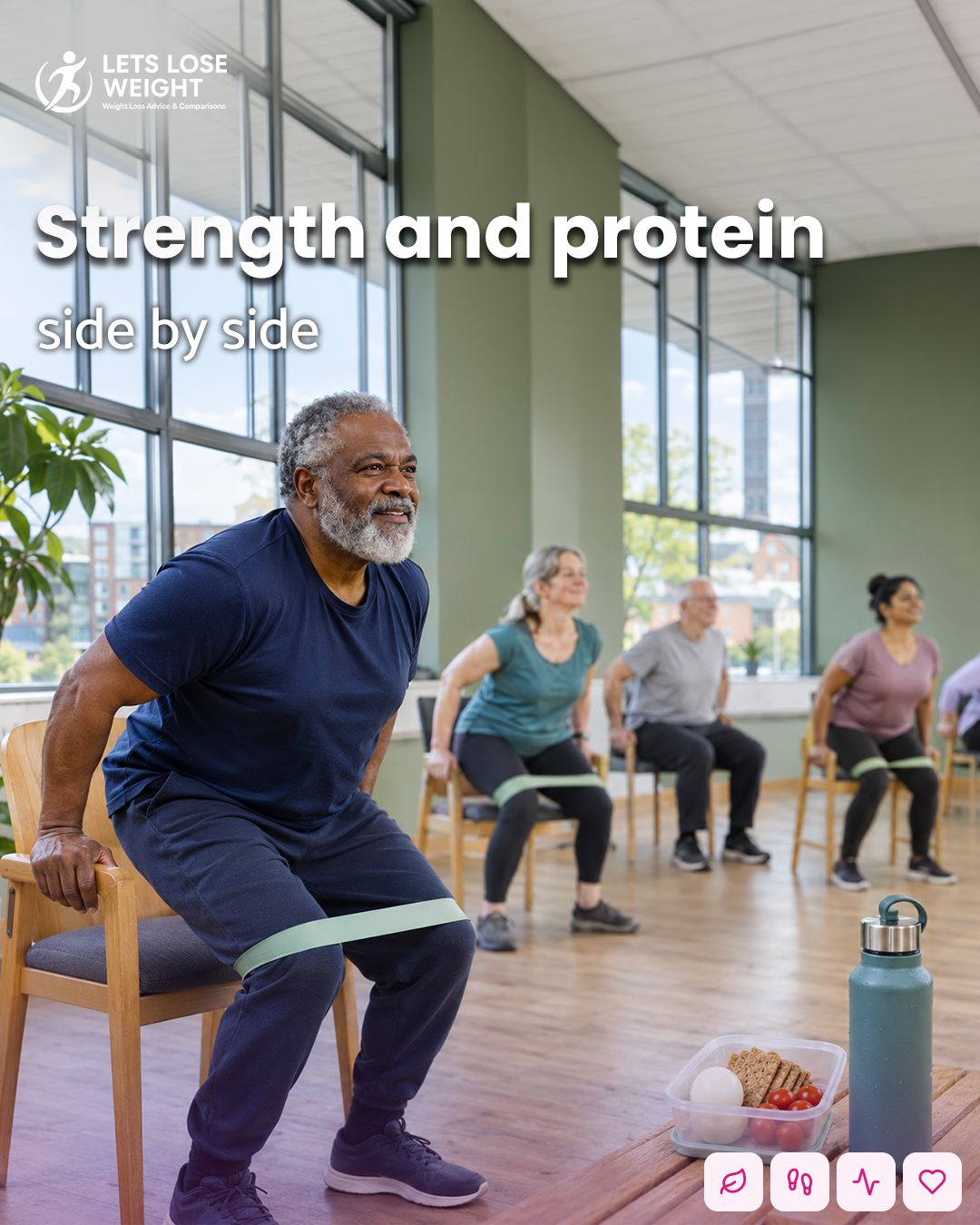
When the scale drops quickly on Wegovy (semaglutide) or Mounjaro (tirzepatide), it is natural to assume it is all fat. In reality, any significant weight loss includes some lean tissue, which covers muscle as well as water, organs and bone. Headlines about "muscle wasting" on weight loss jabs have left many people worried about what is happening under the surface.
This guide explains what the trials found about lean mass, why it matters, and the practical food and activity habits that give you the best chance of keeping muscle while you lose weight.
The short answer
Some lean mass loss is expected with any weight loss, including on GLP-1 medication. The two habits with the best evidence for limiting it are regular strength-based activity, at least twice a week, and enough protein spread across the day. Avoiding very low food intake matters too, because eating too little makes muscle harder to hold on to.
What the trials show about lean mass
In the STEP 1 trial, a group of 140 participants had body scans. Those taking semaglutide lost around 19% of their fat mass and around 10% of their lean mass over 68 weeks (Wilding et al., 2021). Lean tissue made up roughly 40% of the tissue lost, although because fat fell further, lean mass made up a larger share of body weight by the end.
In SURMOUNT-1, a scan substudy of 160 people taking tirzepatide reported that roughly three quarters of the weight lost was fat and a quarter lean mass, a similar split to the placebo group (Look et al., 2025).
What the research shows, then, is that lean mass loss on these medicines appears broadly in proportion to the amount of weight lost, rather than unusually high. The evidence is still limited in important ways: lean mass on a scan is not the same as muscle, few studies have measured strength or physical function, and most trials did not test specific diet or exercise plans alongside the medication.
Why holding on to muscle matters
Muscle helps you move, climb stairs, carry shopping and stay steady on your feet. It also contributes to the energy your body uses at rest. This matters more on GLP-1 medication because appetite can drop sharply and weight can come off faster than with diet alone, so the habits that protect muscle need to be in place from the start. It matters most for people over 65, who naturally lose muscle with age, and for anyone who was not very active before starting treatment.
Strength activity: the biggest lever
The UK Chief Medical Officers recommend that adults do muscle-strengthening activity on at least two days a week, alongside 150 minutes of moderate activity such as brisk walking. Adults over 65 are advised to include balance work too.
Strength activity does not have to mean a gym. In practice, this looks like:
- Sit-to-stands from a dining chair while the kettle boils
- Wall press-ups or press-ups against the kitchen worktop
- Carrying shopping bags home instead of driving short distances
- Resistance band exercises at home, or a beginner class at a local leisure centre
- Heavy gardening such as digging or lifting compost bags
For a starter plan that suits a lower energy intake, see exercising on Wegovy or Mounjaro.
Food habits that support muscle
Protein provides the building blocks muscle needs to repair after activity. The UK Reference Nutrient Intake for adults is 0.75g of protein per kilogram of body weight a day, and some NHS weight management services suggest higher targets for people on weight loss medicines, such as 80g to 100g a day from Guy's and St Thomas' (checked October 2026). Why protein matters for weight loss generally is covered in protein and weight loss.
The practical habits that make the biggest difference are:
- Spread protein out. Include some at breakfast, lunch and dinner rather than saving it all for the evening meal. Eggs, Greek-style yoghurt, cottage cheese, fish, chicken, tofu, lentils and beans all work.
- Eat protein first. When fullness arrives quickly, the first few mouthfuls matter most.
- Pair activity with food. A meal or snack containing protein after strength exercise, such as a glass of milk or beans on wholemeal toast, supports recovery.
- Avoid eating too little overall. Very low intakes push the body to use more lean tissue for energy, so regular small meals beat long gaps without food.
Common mistakes
- Focusing only on the number on the scale rather than strength and how your clothes fit
- Relying on walking alone, which is valuable for health but does little to maintain muscle
- Skipping breakfast and lunch, then trying to fit all your protein into one small dinner
- Turning to protein supplements before trying everyday foods, which usually cover needs
When to get advice
If you feel weaker, find stairs or getting up from a chair harder, or are losing weight much faster than expected, speak to your prescriber or GP, and raise any persistent side effects with them. A registered dietitian can help set a protein target that suits you, and you should always check with your GP before increasing protein if you have kidney disease, or if you have diabetes, are pregnant or are under 18. If you have a heart condition, joint problems or have not exercised for a long time, ask your GP before starting a new exercise routine.
The bottom line
Losing some lean mass is a normal part of losing weight, and the evidence so far suggests GLP-1 medication does not cause unusually high losses. You can still influence how much you keep. Do some strength-based activity at least twice a week, include protein at every meal, and avoid very low food intakes. For how this fits into a wider way of eating, see the nutrition for sustainable weight loss guide.
Sources and further reading
- Wilding JPH et al. (2021): Once-weekly semaglutide in adults with overweight or obesity (STEP 1), New England Journal of Medicine, including the body composition substudy
- Look M et al. (2025): Body composition changes during weight reduction with tirzepatide in the SURMOUNT-1 study, Diabetes, Obesity and Metabolism
- UK Chief Medical Officers (2019): Physical activity guidelines
- Department of Health (1991): Dietary Reference Values for Food Energy and Nutrients for the United Kingdom
- Guy's and St Thomas' NHS Foundation Trust: Lifestyle advice for people taking weight loss medicines, Food and nutrition
Related reading from the Health Hub
- How to build high-protein meals
- Exercise and movement for weight loss: UK pillar guide
- Not losing weight? Understanding a plateau
This article is for general information only and does not replace individual advice. Speak to your GP, a registered dietitian or your prescriber before making significant changes to your diet, especially if you have a medical condition or take weight loss medication.
Get weekly weight loss tips
Join our newsletter for provider updates, expert guidance, and exclusive offers — no spam.
Subscribe free