Why Stress Makes Healthy Eating Harder (And Affects Weight Loss More Than You Think)
If healthy eating feels harder when you’re stressed, there’s a reason. Learn how stress affects weight loss through food choices and daily habits.
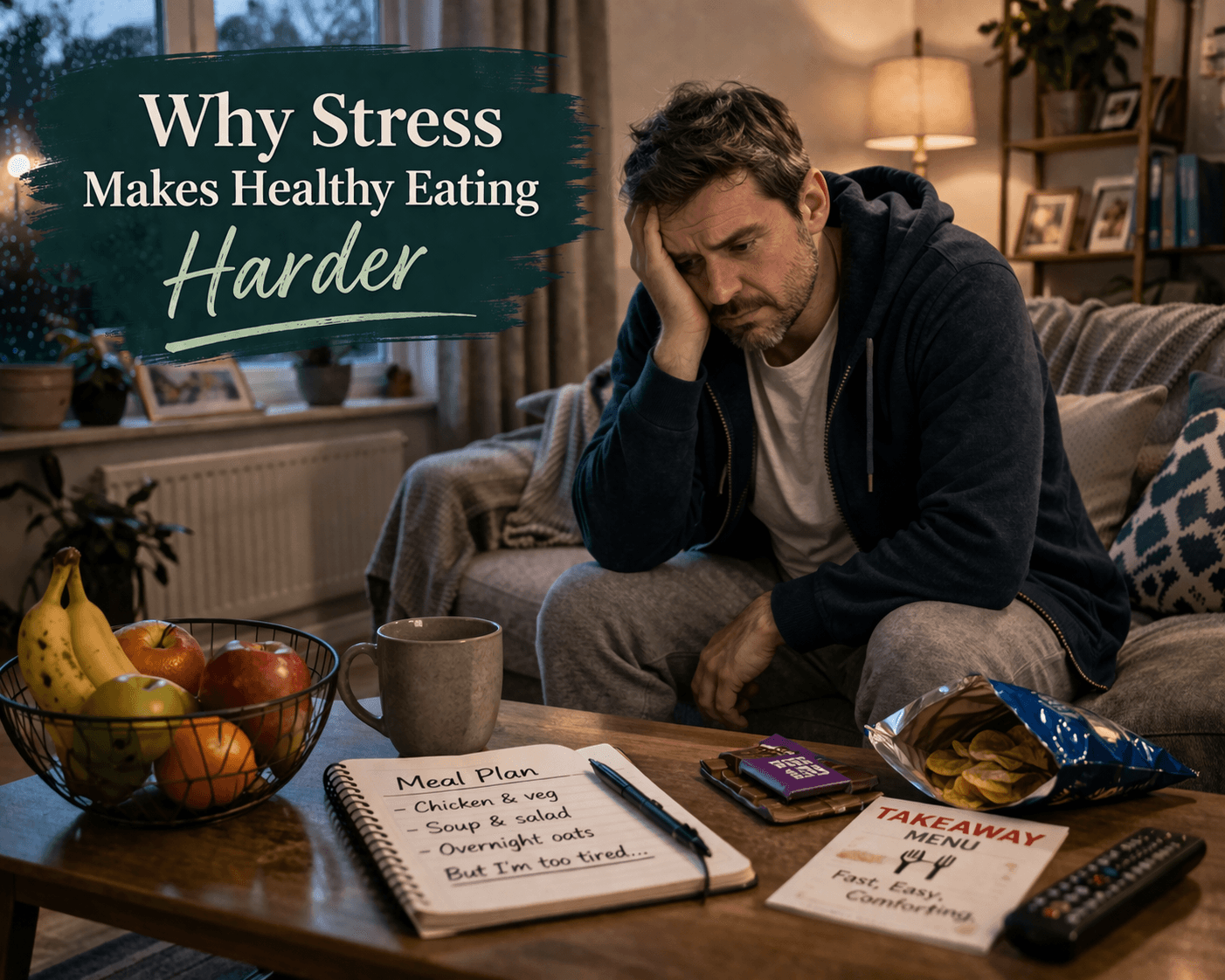
Why Stress Makes Healthy Eating Harder (And Affects Weight Loss More Than You Think)
Introduction
If eating well feels much harder when life is stressful, you’re not imagining it.
In real life, this often looks like planning healthy meals with good intentions, then ending up choosing whatever is quickest or easiest by the end of the day. It can feel frustrating, especially when you know what you “should” be doing.
Understanding how stress affects weight loss helps explain why healthy eating often becomes harder under pressure.
How Stress Affects Weight Loss Through Food Choices
When stress levels are high, your brain prioritises relief and convenience.
What tends to happen is that your decision-making becomes more reactive. Instead of planning meals or thinking ahead, you’re more likely to choose foods that feel easy, quick, or comforting.
This is one of the most practical ways how stress affects weight loss in everyday life.
Why Healthy Eating Feels Harder Than It Should
A common mistake people make is assuming they just need more discipline.
- Skipping meals earlier in the day
- Craving high-calorie or sugary foods
- Choosing takeaway or convenience meals
- Eating without much structure or planning
These patterns don’t feel extreme, but they can gradually slow progress.
Why Does Stress Make Healthy Eating Harder? (Featured Answer)
Stress makes healthy eating harder by reducing mental energy, increasing cravings, and making convenient foods more appealing. This affects daily food choices, consistency, and portion awareness, which can slow weight loss even when you intend to eat well.
Why Evenings Tend to Be the Most Difficult
In real life, this often becomes most noticeable in the evening.
By that point, your energy is lower, your patience is reduced, and you’re more likely to prioritise comfort over structure. Cooking can feel like effort, and hunger often feels more urgent.
What tends to happen is that evenings become the point where healthy intentions start to slip.
This connects closely with Why Stress Leads to Emotional Eating (And How It Affects Weight Loss).
Why Trying to Be Stricter Doesn’t Work
When healthy eating becomes inconsistent, it’s natural to try and “tighten things up.”
A common mistake people make is adding more rules or cutting out foods entirely. What tends to happen is that this increases pressure, which makes stress worse — and food choices even harder to manage.
What Helps in Practice
- Keeping meals repetitive and easy to prepare
- Eating regularly to avoid extreme hunger
- Having simple, balanced options available
- Reducing decision-making where possible
You may also find it helpful to revisit How Stress Affects Weight Loss Motivation (And Why It Feels So Hard).
Conclusion
If healthy eating feels harder when you’re stressed, there’s usually a reason behind it.
Once you understand how stress affects weight loss, it becomes easier to stop blaming yourself and start adjusting your approach. Often, the goal isn’t to be stricter — it’s to make things easier to maintain.
Get weekly weight loss tips
Join our newsletter for provider updates, expert guidance, and exclusive offers — no spam.
Subscribe free