Portion Sizes Made Simple
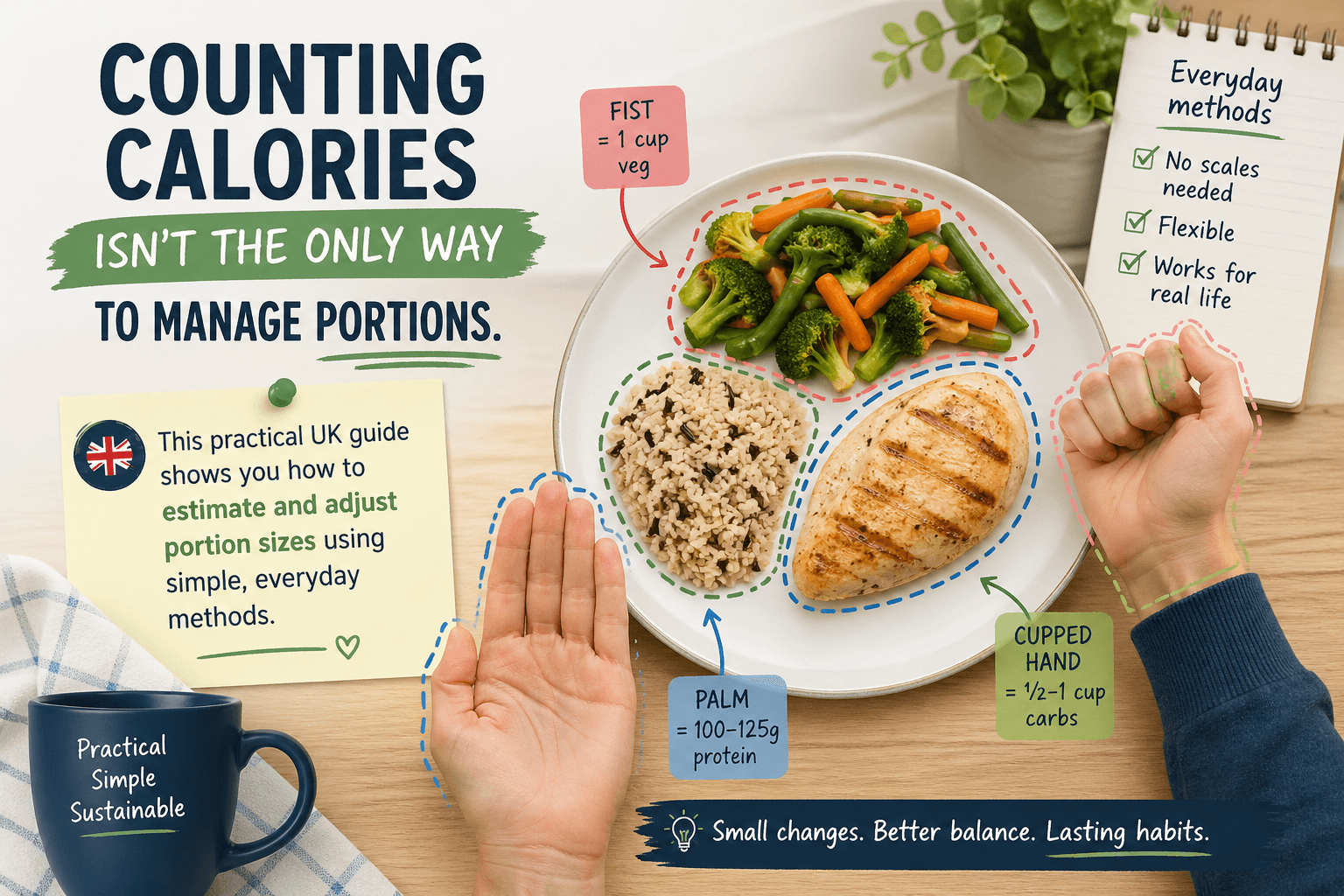
Counting calories isn't the only way to manage portions. This practical UK guide shows you how to estimate and adjust portion sizes using simple, everyday methods.
Portion sizes have grown considerably over the past few decades, and many people find it genuinely difficult to judge how much food is appropriate without weighing or measuring everything. The good news is that you do not need to count calories or use food scales to get a reasonable handle on portions.
This guide offers practical, visual approaches to understanding portion sizes — helpful whether you are eating at home, cooking from scratch, or eating out. For a broader overview of how nutrition supports weight loss, see Nutrition for Sustainable Weight Loss: A UK Clinical Pillar Guide.
Why portion awareness matters
Portion size is one of the most consistent influences on how much we eat overall. Research consistently shows that larger portions lead to greater calorie intake, often without a corresponding increase in fullness. Being portion-aware — not portion-obsessed — can help you eat more in line with your hunger and fullness signals.
This is especially relevant if you are using weight loss medication, as appetite signals may be reduced and smaller meals become the norm. For more on eating well on medication, see What to Eat on GLP-1 Medications.
A simple hand guide to portions
Your hand is a portable, always-available portion guide that scales roughly to your body size. Here is how to use it:
Protein — a palm-sized portion (chicken, fish, tofu, meat) is a useful starting point per meal. Carbohydrates — a cupped handful of cooked rice, pasta, or grains. Vegetables — two cupped handfuls, or as much as fills half your plate. Fats — a thumb-sized amount of butter, nut butter, or hard cheese; a thumb and a half for olive oil.
These are starting points, not rigid rules. Appetite, activity level, and individual needs all vary, and these guides are simply a way to build awareness without requiring scales or apps.
The plate model as a portion framework
Another practical approach is to use your plate itself as a guide. A balanced plate for weight loss typically looks like: half the plate filled with vegetables or salad, a quarter with a protein source, and a quarter with a carbohydrate such as wholegrains, potatoes, or pulses.
This structure naturally moderates portions of higher-calorie foods while keeping vegetables generous. For more detail, see What a Balanced Plate Looks Like (UK Guide).
Portion sizes when eating out
Restaurant and takeaway portions are often significantly larger than home-cooked equivalents. A few practical approaches can help: sharing a starter or side instead of ordering a full portion, asking for sauces and dressings on the side, or eating slowly and pausing mid-meal to check in with your hunger level before finishing everything on the plate.
None of this requires avoiding eating out. It is simply about building a little more awareness into the experience. For more on navigating food choices away from home, see Eating Out While Trying to Lose Weight.
Portion sizes and GLP-1 medication
If you are taking GLP-1 medication, your portion sizes may reduce naturally as appetite decreases. In this context, the priority shifts slightly — rather than moderating large portions, the focus becomes ensuring that smaller portions are as nutrient-dense as possible.
Protein and fibre are particularly important to include even in small meals, as they support fullness, muscle preservation, and digestive health. For more on this, see Protein and Weight Loss: Why It Matters More Than You Think and Fibre and Fullness: The Missing Piece in Most Diets.
Avoiding portion distortion over time
Portion sizes can gradually creep upward without us noticing, particularly when eating familiar foods or eating quickly. A few simple habits can help maintain awareness: using smaller plates and bowls, serving food in the kitchen rather than from dishes on the table, and eating without screens where possible.
These are not rules to follow perfectly — they are small environmental adjustments that make it slightly easier to eat in line with your actual hunger rather than external cues.
Get weekly weight loss tips
Join our newsletter for provider updates, expert guidance, and exclusive offers — no spam.
Subscribe free