Fibre, Fluids and Digestion on GLP-1 Medication: Eating to Stay Regular
Constipation and sluggish digestion are common on Wegovy and Mounjaro. How much fibre and fluid UK guidance suggests, and the foods that help when portions are small.
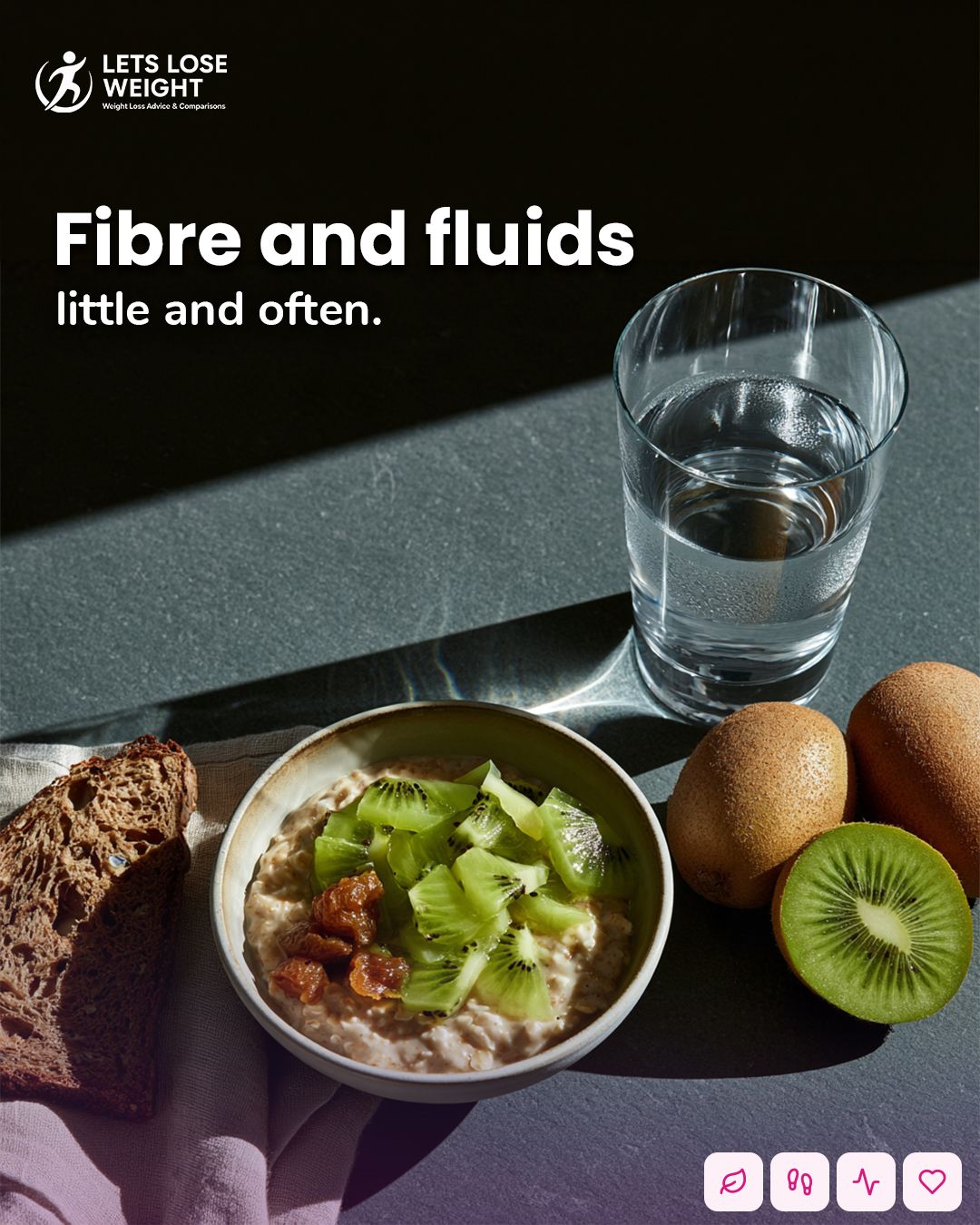
Wegovy (semaglutide) and Mounjaro (tirzepatide) slow the rate at which food leaves your stomach. That is part of how they keep you full, but it also means digestion as a whole can feel slower. Constipation is one of the most commonly reported side effects, and eating smaller portions makes it harder to get the fibre and fluid that usually keep things moving.
This guide covers the food side of the problem: how much fibre and fluid UK guidance recommends, which foods have the best evidence for helping you stay regular, and how to fit them into a reduced appetite.
The short answer
UK guidance recommends 30g of fibre a day for adults, alongside 6 to 8 glasses of fluid. On GLP-1 medication, spread fibre across small meals, increase it gradually to avoid bloating, and sip fluids through the day. Kiwi fruit, prunes and wholegrains are practical places to start.
Why digestion changes on GLP-1 medication
GLP-1 medicines slow stomach emptying and reduce appetite. Less food going in usually means less fibre and less fluid, and food moving more slowly through the gut gives the bowel more time to absorb water from stools, making them harder to pass. Constipation and diarrhoea are both listed as very common side effects in the Mounjaro patient leaflet, affecting more than 1 in 10 people, and both appear among the most commonly reported effects of Wegovy.
Fluids matter for another reason. The UK product information for Wegovy notes that gastrointestinal side effects such as vomiting and diarrhoea can lead to dehydration, so drinking enough is part of looking after yourself on treatment (SmPC, checked October 2026).
What UK guidance says about fibre and fluids
The Scientific Advisory Committee on Nutrition recommends that adults eat 30g of fibre a day. Most people fall well short: recent national survey data puts the average adult intake at around 16g a day, and only about 4 in 100 adults reach the target (OHID and British Nutrition Foundation, 2025 to 2026).
For fluids, the Eatwell Guide suggests 6 to 8 glasses a day. Water, milk, and sugar-free drinks including tea and coffee all count. You may need more in hot weather, when you are active, or if you have diarrhoea or vomiting. Pale straw-coloured urine is a simple sign you are drinking enough.
How fibre helps fullness is covered in fibre and fullness; here the focus is on keeping digestion comfortable.
Foods with the best evidence for staying regular
In 2025, the British Dietetic Association endorsed new guidelines on diet and chronic constipation, led by researchers at King's College London. They found the strongest food evidence for a few specific foods rather than for "eating more fibre" in general:
- Kiwi fruit: two to three green kiwis a day improved stool frequency in trials, with fewer side effects than prunes
- Prunes: a small handful a day, or prune juice
- Rye bread: linked to more frequent stools, although the amounts studied were large
- Mineral water high in magnesium: improved symptoms compared with ordinary tap water in several trials
These were studied in people with chronic constipation rather than people on weight loss medication, so treat them as sensible options to try for a few weeks rather than guaranteed fixes.
How to add fibre to small meals
A simple way to do this is to make one swap per meal rather than overhauling everything at once. Adding a lot of fibre quickly can cause wind, bloating and cramps, which feel worse when your stomach is already emptying slowly.
In practice, this looks like:
- Breakfast: porridge oats with sliced kiwi, or wholegrain cereal with a few chopped prunes
- Lunch: soup with lentils, beans or barley, and a slice of rye or wholemeal bread
- Snacks: a pear or apple with the skin on, or a small handful of nuts
- Dinner: a small jacket potato with its skin, frozen peas or mixed vegetables, and a portion of chickpeas or beans in sauces and curries
Fibre needs fluid to work well, so increase both together. Keeping a water bottle in sight and having a drink with every meal and snack is often enough. Gentle movement such as a daily walk also helps the bowel work more regularly.
Common mistakes
- Relying on salad for fibre: leaves are mostly water; beans, oats, wholegrains and fruit carry far more
- Big high-fibre meals: a large bowl of bran or beans can sit heavily when your stomach empties slowly, so spread fibre across the day
- Drinking only with meals: sipping between meals is easier and stops drinks filling you up before you have eaten
- Turning to supplements first: fibre supplements and laxatives are best discussed with a pharmacist or GP before you start them
When to get advice
Speak to your prescriber, pharmacist or GP if constipation lasts more than a week despite changes to food and fluids, or if you have severe stomach pain, a swollen tummy, ongoing vomiting, blood in your stools or signs of dehydration such as dizziness and very dark urine. Persistent side effects should always be raised with your prescriber. For symptom management beyond food, see how to reduce side effects. If you have kidney disease, diabetes or a bowel condition, or are pregnant, ask a registered dietitian or GP before changing your fibre or fluid intake significantly.
The bottom line
Slower digestion is a common part of life on GLP-1 medication, but food and fluids make a real difference. Aim for the UK targets of 30g of fibre and 6 to 8 glasses of fluid a day, build up gradually, spread both across small meals, and try foods with good evidence such as kiwi fruit and prunes. For how this fits into a wider way of eating, see the nutrition for sustainable weight loss guide.
Sources and further reading
- Scientific Advisory Committee on Nutrition (2015): Carbohydrates and Health
- British Nutrition Foundation (2026): Dietary fibre report and the UK fibre gap
- Dimidi E et al. (2025): British Dietetic Association guidelines for the dietary management of chronic constipation in adults, Journal of Human Nutrition and Dietetics
- Eli Lilly: Mounjaro Patient Information Leaflet (medicines.org.uk, checked October 2026)
- Novo Nordisk: Wegovy Summary of Product Characteristics, section 4.4 (medicines.org.uk, checked October 2026)
- Food Standards Agency and Public Health England: The Eatwell Guide
Related reading from the Health Hub
- What to eat on GLP-1 medication
- What a balanced plate looks like
- Mounjaro side effects and tolerability
- Exercising on Wegovy or Mounjaro
This article is for general information only and does not replace individual advice. Speak to your GP, a registered dietitian or your prescriber before making significant changes to your diet, especially if you have a medical condition or take weight loss medication.
Get weekly weight loss tips
Join our newsletter for provider updates, expert guidance, and exclusive offers — no spam.
Subscribe free